Nous sommes responsables de la construction-----nous sommes responsables de la fabrication-----nous sommes responsables de la formation

Une plieuse panneau CNC peut automatiser le pliage, améliorer la précision et réduire la main-d'œuvre. Mais ce n'est pas la machine adaptée à toutes les pièces. Si les acheteurs ignorent ses limites, ils risquent une mauvaise qualité de pliage, des problèmes d'outillage ou un faible retour sur investissement. Le bon choix commence par la bonne application.
Une plieuse panneau CNC est idéale pour les panneaux en tôle répétitifs, les armoires, les coffrets, les couvercles et les boîtiers. Ses principales limites concernent l'épaisseur du matériau, la hauteur de rebord, la géométrie de pliage, l'accès des outils, la taille des pièces et les besoins de pliage spéciaux. Les acheteurs devraient comparer le pliage panneau avec la presse plieuse avant de choisir la bonne machine de pliage.
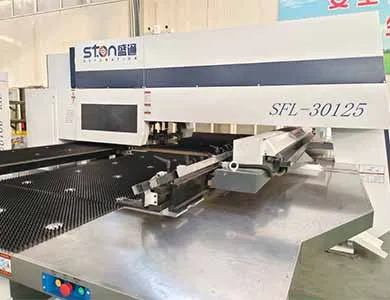
A Cintreuse de panneaux CNC est une machine de pliage automatique pour tôle. Elle utilise une pince, un système de positionnement, ainsi que des lames de pliage supérieure et inférieure pour plier le bord d'une feuille de métal. Le système de commande CNC gère la séquence de pliage, les angles de pliage, le mouvement des outils et la position de la pièce.
Contrairement à une presse plieuse traditionnelle, une plieuse panneau soutient la pièce sur une table pendant le processus de pliage. Cela la rend utile pour les portes d'armoires, les coffrets électriques, les panneaux CVC, les couvercles d'appareils, les pièces de mobilier métallique et d'autres pièces en tôle répétitives.
L'intérêt est évident. Une plieuse-panneauteuse peut automatiser les tâches de pliage répétitives, réduire l'intervention manuelle, améliorer la répétabilité et aider les usines à maîtriser les coûts de main-d'œuvre. Mais chaque machine de pliage a ses limites. Comprendre ces limites aide les acheteurs à éviter un mauvais investissement.

Les principales limites d'une plieuse-panneauteuse concernent l'épaisseur du matériau, la hauteur de pliage, la longueur de pliage, la géométrie de la pièce, l'accès des outils et le type de production. Une plieuse-panneauteuse n'est pas une machine universelle pour tous les types de pliage de métal. C'est une machine de pliage spécialisée pour la production de tôles de type panneau.
Les limites courantes incluent :
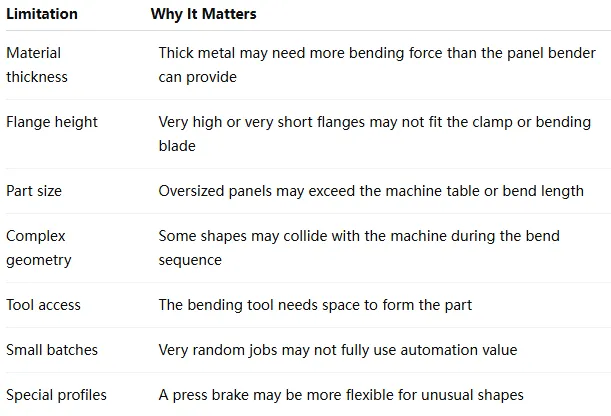
Ces limites ne rendent pas la plieuse-panneauteuse moins performante. Elles indiquent simplement où elle excelle. La machine est excellente lorsque le produit correspond à sa méthode de pliage.
A cintreuse de panneaux contre presse plieuse la comparaison est l'une des questions les plus importantes pour les acheteurs. Les deux machines plient la tôle, mais elles fonctionnent différemment.
Une presse plieuse utilise un poinçon et une matrice pour plier le métal. Elle est flexible, robuste et largement utilisée en fabrication. Une presse plieuse CNC peut traiter de nombreux matériaux, angles de pliage et pièces sur mesure. Une presse plieuse hydraulique est souvent plus adaptée aux matériaux plus épais et au pliage intensif.
Une plieuse-panneau plie le bord de la tôle à l'aide de lames de pliage pendant que la tôle reste maintenue. Elle est plus rapide et plus automatisée pour les pièces de panneaux répétitives. Elle peut réduire la dépendance à l'opérateur et améliorer la régularité en production de masse.
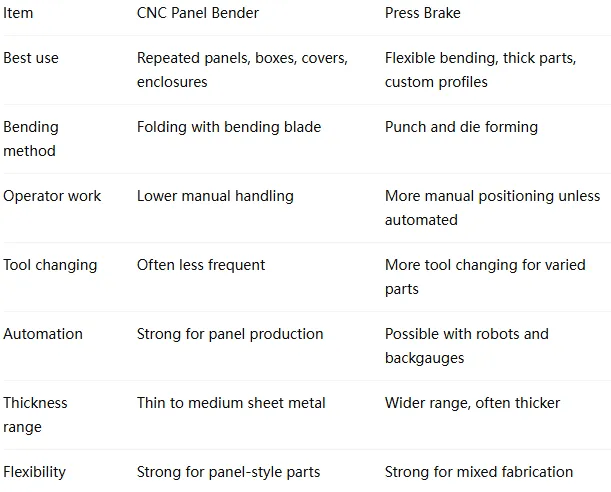
La bonne réponse n’est souvent pas “ plieuse-panneau ou presse plieuse ”. De nombreuses usines ont besoin des deux. La plieuse-panneau gère les panneaux répétitifs. La presse plieuse gère les pièces épaisses, atypiques ou à faible volume.

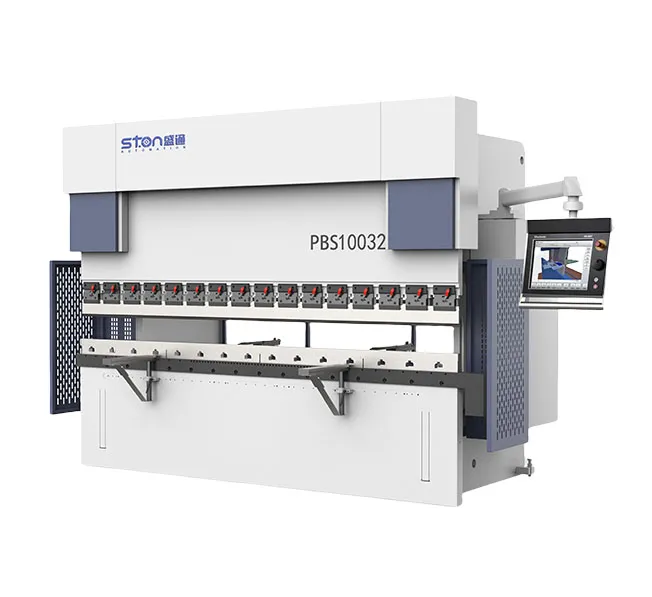
L’épaisseur du matériau est l’une des limitations les plus évidentes. Une plieuse-panneau est normalement utilisée pour des tôles minces à moyennes. Si le matériau est trop épais, la machine peut ne pas disposer d’une force de pliage suffisante, ou l’outil peut ne pas former le pli en toute sécurité.
Le type de matériau compte également. L’acier inoxydable est plus difficile à plier que de nombreuses tôles en acier doux, car il présente une résistance plus élevée et un retour élastique plus important. L’aluminium peut être plus facile à plier, mais il se raye plus facilement. La tôle galvanisée nécessite une protection du revêtement.
Un acheteur ne devrait jamais se demander uniquement : “ La machine peut-elle plier 2 mm ? ” Une meilleure question est : cette machine à plier des panneaux peut-elle plier mon matériau, mon épaisseur, ma longueur de pli, mon rayon de pli et la forme de ma pièce, de manière répétée ?
For thicker materials or plate bending, a press brake machine may be more suitable.
A panel bender must hold the workpiece with a clamp and fold the edge with a bending blade. Because of this, flange height and part size matter a lot.
If the flange is too short, the clamp may not have enough area to hold the metal sheet. If the flange is too high, the part may hit the machine during the bending operation. If the bend length is too long, the part may exceed the machine capacity.
Important size-related factors include:
For electrical cabinet factories, this is very important. Cabinet doors, side panels, and enclosures often have multiple bends. A small change in flange height can decide whether the panel bender can complete the bend sequence smoothly.
Plieuse de tôles machines are strong for panel-shaped parts, but some geometries are difficult. Parts with deep boxes, closed shapes, narrow internal bends, very high flanges, or unusual return bends may need careful review.
A panel bender may face problems when the workpiece cannot reposition correctly or when a formed flange blocks the next bend. This is why bend sequence matters. One wrong bend order can make the final bend impossible.
For complex bending, the supplier should check the drawing before confirming the machine. A good technical review can prevent a wrong purchase.
Automation improves productivity when the part design, order volume, and workflow are suitable. A panel bender can automate repeated bend sequences, reduce manual labor during the bending process, and improve production consistency.
Automation is especially useful when the factory makes many similar parts. Electrical enclosures, HVAC panels, appliance shells, and metal furniture panels are good examples. The operator loads or supervises the process, while the CNC system controls the bending operation.
Automation can help with:
For high-volume panel bending, automation can create strong ROI. For very random one-off fabrication, a press brake may remain more practical.
Automation is powerful, but it is not always the best answer. If a factory bends many one-off parts, very thick parts, or unusual profiles, a fully automated panel bending system may not be the best first investment.
In some workshops, a CNC press brake may be more flexible. It can handle more types of bend shapes, thicker metal, and custom bending needs. This is why choosing the right bending equipment depends on product mix.
Automation may not be ideal when:
A smart buyer does not chase automation for its own sake. A smart buyer automates the process that repeats often and costs the most labor.
CNC panel bending is strongest in industries that need many repeated sheet metal panels. These products often need clean edges, stable bend angles, and good appearance.
Common industries include:
In these industries, panel benders can produce doors, covers, panels, shelves, trays, and box-like metal parts efficiently. Compared to traditional bending machines, modern panel bending machines can reduce repeated manual handling and improve production stability.
For industries such as automotive, appliance manufacturing, and furniture production, the use of panel benders can also support scalable automation and better process control.
To choose the right bending machine, start with your product family. List the parts you bend most often. Then review material, thickness, part size, bend length, flange height, and batch size.
A panel bender is usually the right machine when most parts are repeated panels, boxes, covers, doors, and enclosures. A press brake is usually better when the factory needs flexible bending, thick material, or special profiles. A combined solution is often best for growing factories.
Buyer checklist:
Choosing the right bending machine is a production decision, not only a purchase decision.
Many smart factories use both panel benders and press brakes. This is often the most practical setup.
The panel bender handles repeated sheet metal panels. The press brake handles thick parts, unusual profiles, and custom bending tasks. Together, they give the factory speed and flexibility.
A balanced workflow may look like this:
Laser cutting → turret punching → panel bending for repeated panels → press brake for special parts → welding or assembly
This workflow helps factories avoid forcing one machine to do every job. Each machine does what it does best. That is how sheet metal fabrication becomes more stable and efficient.
STON est un fabricant chinois de machines à commande numérique pour la tôlerie. Nous proposons des plieuses de panneaux, des poinçonneuses à tourelle, des presses plieuses, des unités de découpe laser et des lignes de production automatisées. Nous nous positionnons comme un fournisseur de solutions d'automatisation pour la tôlerie destinées aux fabricants du monde entier.
STON helps sheet metal fabricators, electrical cabinet factories, HVAC manufacturers, appliance producers, metal furniture makers, and machinery distributors choose machines based on real production needs. We do not only ask, “Do you want a panel bender?” We ask, “What do you need to bend, how often, and what is your future automation plan?”
Liens internes STON utiles :
When buyers share drawings, materials, product size, output targets, and layout, STON can recommend a panel bender, press brake, or combined automation solution.
Before ordering a panel bending machine, buyers should ask detailed questions. A good supplier should welcome these questions.
Ask the supplier:
These questions reduce risk. They also help the supplier recommend the right panel bender instead of a generic machine.
The biggest buyer mistake is believing that one machine can solve every bending problem. A panel bender is excellent for many products, but it is not a magic machine.
Other mistakes include:
A panel bender is a key piece of equipment, but it must fit the factory’s process. Correct selection protects ROI.
The main limitations are material thickness, flange height, bend length, part geometry, tool access, and special bending shapes. A panel bender is best for repeated sheet metal panels, not every bending task.
Not always. A panel bender is excellent for repeated panels, boxes, covers, and enclosures. A press brake is better for thick material, custom profiles, and flexible bending jobs.
Panel bending works well for electrical cabinet doors, HVAC panels, appliance covers, metal furniture parts, server racks, stainless steel panels, and sheet metal enclosures.
It depends on the machine model, material thickness, bend length, and bend geometry. Thick stainless steel may need a press brake because it requires higher bending force.
Choose a press brake when your parts are thick, highly varied, unusual in shape, or require special tooling. Choose a panel bender when you make repeated panel-shaped sheet metal parts.
Choose a panel bending machine by checking your drawings, material type, thickness, bend length, flange height, part geometry, batch size, labor cost, automation needs, and future production plan.
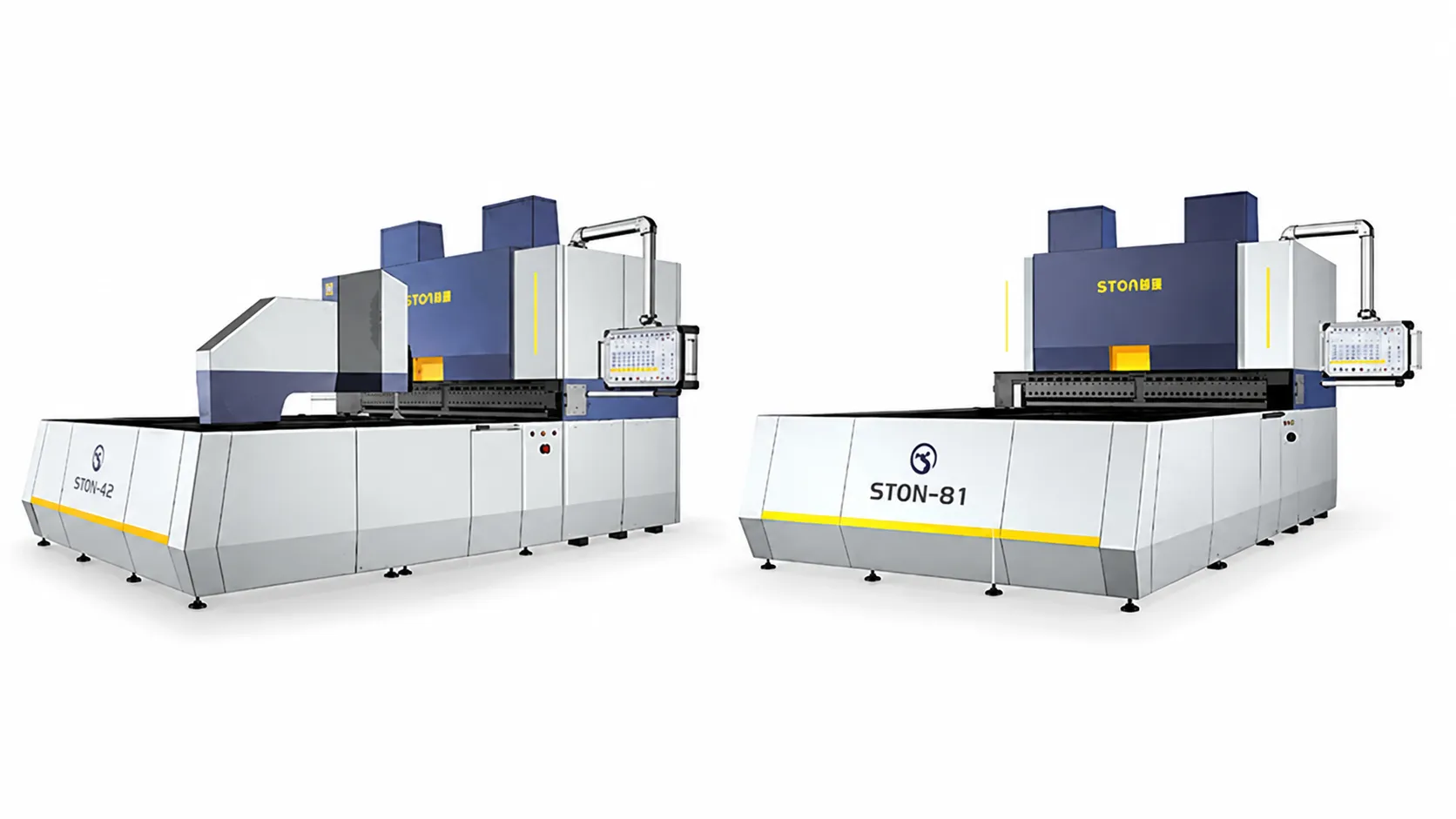

Que vous modernisiez une ligne existante ou que vous lanciez un nouveau projet, STON personnalisera une solution CNC pour votre production.


