We zijn verantwoordelijk voor het bouwen-----we zijn verantwoordelijk voor de productie-----we zijn verantwoordelijk voor de training

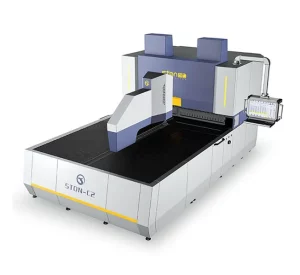
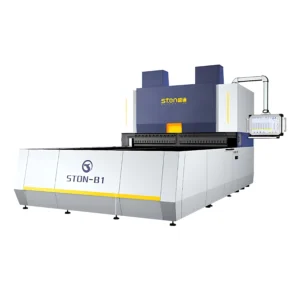
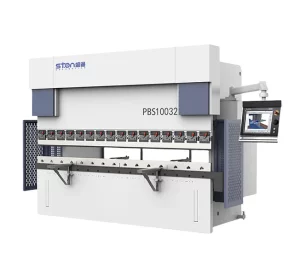
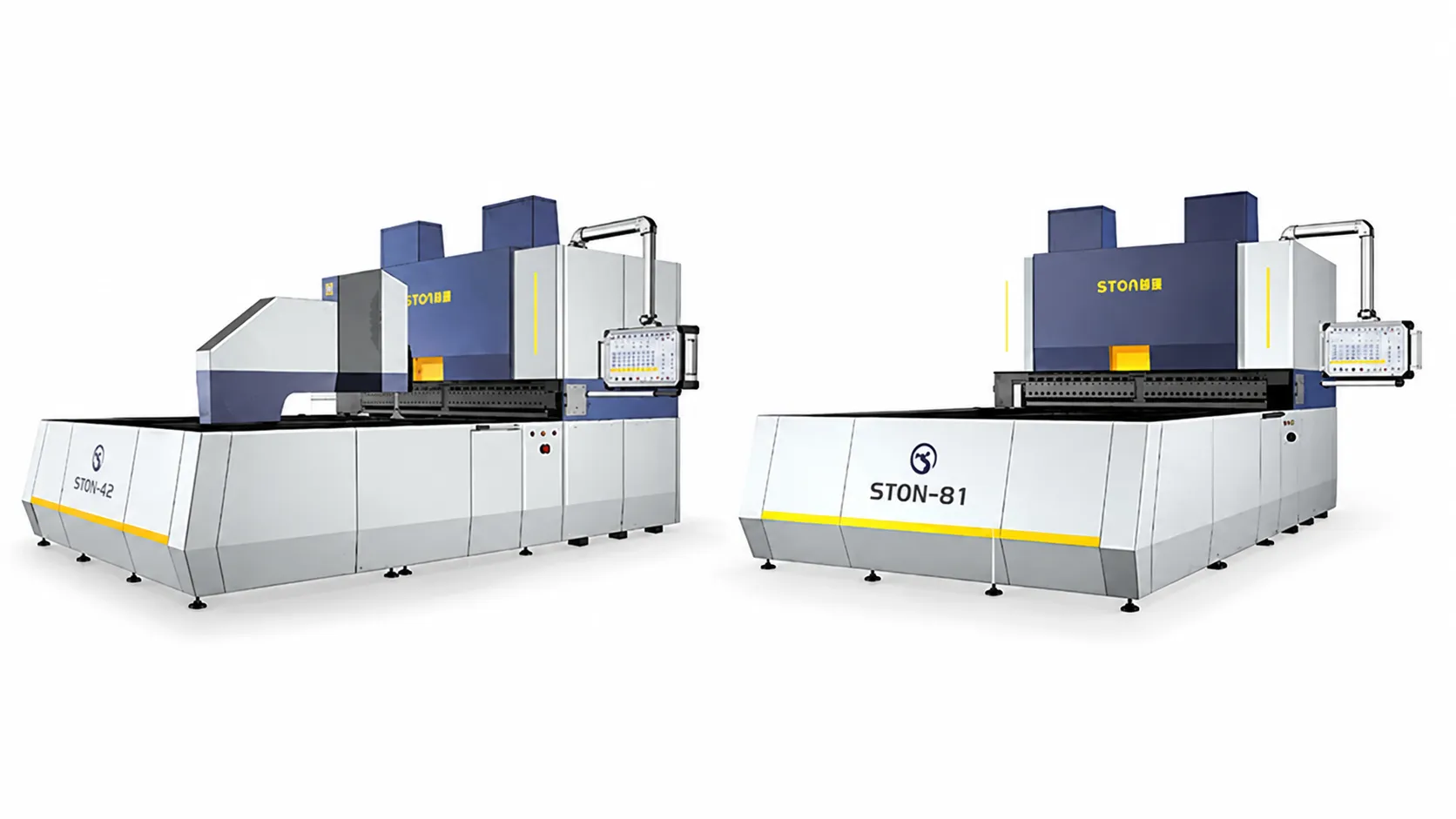
A paneelbuiger klemmen een plaat eenmaal vast en vouwt meerdere zijden in één cyclus, het meest geschikt voor gesloten behuizingen tot 2800×1500mm. Een kantpers buigt één lijn per keer, met een capaciteit tot 320T en bedden tot 4100mm — beter voor grote panelen, dikke plaat, of unieke vormen die de gereedschappen van een paneelbuiger niet kunnen bereiken.
Beide machines buigen plaatmetaal. Daar houdt de overeenkomst op.
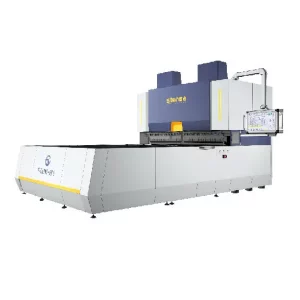
Een kantpers vormt één rechte lijn per slag. De operator (of een CNC-achteraanslag) herpositioneert de plaat tussen de slagen door, en het onderdeel wordt buiging voor buiging opgebouwd. Een paneelbuiger werkt andersom: de plaat wordt eenmaal geklemd en een set vouwmessen beweegt eromheen, waarbij meerdere zijden — soms alle vier — worden gesloten voordat het onderdeel wordt vrijgegeven. STON's persarm-paneelbuigmachine werkt met maximaal 15 gelijktijdig gekoppelde servo-assen om dit in één klemcyclus te doen.
Dat ene verschil bepaalt bijna al het andere: voor welke onderdelen elke machine geschikt is, hoe snel hij werkt en waar de groottebeperkingen liggen.

| Dimensie | STON CNC Paneelbuigmachine (Persarm Type, A–D+) | STON-kantpers (PBS elektrohydraulische servo) |
|---|---|---|
| Maximale afmetingen van het werkstuk/bed | 1000 × 1000 mm (A) tot 2800 × 1500 mm (D+) | Lengte van het bed: 1500–4100 mm, afhankelijk van het model |
| Maximale dikte bij volledige buiging | Gelaste carrosserie: CR 1,5 mm / RVS 1,0 mmGietstuk: CR 2,0 mm / RVS 1,2 mm | Geclassificeerd op basis van tonnage (63T–320T) in plaats van een vaste dikte; de capaciteit is afhankelijk van de lengte van het bed en het materiaal |
| Bereik van de buighoogte | 170 / 300 / 400 mm | Wordt bepaald door de cilinderslag (215–315 mm) en de verplaatsing van de achteraanleg, in plaats van door een vaste hoogte
|
De bovenstaande cijfers voor de paneelbuigmachines zijn afkomstig uit het specificatieblad van STON voor het type ‘Press Arm’; de cijfers voor de kantpersen zijn afkomstig uit de PBS elektrohydraulische servoserie.
Kantpersen zijn geen verouderde technologie die de plaatbuiger geleidelijk aan aan het afschaffen is. Er zijn twee dingen die een plaatbuiger echt niet kan:
Ook bij kantpersen is een “gesloten” vorm van het onderdeel niet nodig. Een enkele beugel, een eenmalige constructieve buiging of een prototypereeks in kleine oplage is vaak goedkoper op een kantpers, omdat er geen reden is om voor één lijn een cyclus over de volledige omtrek te programmeren en vast te klemmen.
De meest voorkomende fout die we horen van mensen die voor het eerst automatiseringsoplossingen aanschaffen: ervan uitgaan dat een paneelbuiger de kantpers op de werkvloer volledig vervangt, om vervolgens halverwege de offerte te ontdekken dat hun grootste SKU een kanaalpaneel van 3200 mm is — wat buiten het klembereik van elke paneelbuigmachine valt. Of het omgekeerde: alleen een paneelbuigmachine aanschaffen voor een productlijn van archiefkasten, om vervolgens te ontdekken dat de kleinste beugel in dezelfde productfamilie (ruim onder de minimale afmetingen van 140 × 190 mm aan alle vier zijden van de paneelbuigmachine) nergens anders heen kan dan naar een kantpers.
De twee machines vormen geen rechtstreeks upgradepad van de ene naar de andere. De meeste plaatbewerkingsbedrijven met een gemengd productassortiment beschikken uiteindelijk over beide: de paneelbuigmachine voor de gesloten onderdelen die in grote hoeveelheden worden geproduceerd, en de kantpers voor alles wat buiten dat bereik valt.
STON bouwt beide machinetypes in eigen beheer in zijn 20.000 m² fabriek in Qingdao, in plaats van onderdelen bij derden in te kopen — een van de redenen waarom het bedrijf voor beide productlijnen een gepubliceerde assemblage-nauwkeurigheid van ±0,05 mm kan garanderen en dit kan ondersteunen met een wereldwijde respons ter plaatse binnen 48 uur in zijn meer dan 80 exportmarkten.
Paneelbuigmachine (Type persarm): vijf framematen, van A (1000×1000 mm) tot D+ (2800×1500 mm), elk verkrijgbaar in een gelaste of gegoten uitvoering. Gegoten behuizingen verhogen de maximale dikte van CR 1,5 mm/SS 1,0 mm tot CR 2,0 mm/SS 1,2 mm. Alle formaten worden geleverd met een ingebouwde automatische laad-/los-aansluiting, snelle compensatie-afstelling voor buignauwkeurigheid en een keuze uit elektrische componenten van Schneider Electric, Airtac of Huichuan/Trio.
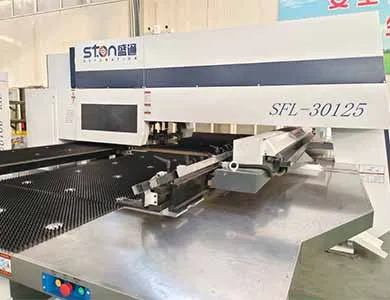
Pers (PBS elektrohydraulische servo): dertien combinaties van tonnage en lengte, variërend van 63T/1500 mm tot 320T/4100 mm, met DELEM-besturingsopties van 53T/58T/66T/69T (Italiaanse ESA beschikbaar). Grating-ruler-feedback in een gesloten lus en een mechanisch compensatiesysteem zijn standaard om de hoekconsistentie over de volledige lengte van het bed te waarborgen.
Geen van beide machines heeft een gepubliceerde prijslijst — het laadvermogen, de bedlengte, het besturingssysteem en de opties voor laden en lossen beïnvloeden allemaal de configuratie, en STON stelt voor elke opbouw een offerte op aan de hand van de onderdeeltekeningen en materiaalspecificaties van de koper. Als de prijs de doorslaggevende factor is bij de keuze tussen de twee machinetypes voor uw productassortiment, vraag dan offertes aan voor beide configuraties op basis van dezelfde onderdelenlijst, in plaats van catalogusprijzen te vergelijken die nog niet bestaan.
V: Kan één machine alles doen wat een paneelbuigmachine en een kantpers samen doen?
A: Niet in het huidige assortiment van STON, en over het algemeen ook niet in de branche. De twee maken gebruik van verschillende klem- en mesmechanismen; een gecombineerde machine zou ten koste gaan van de klemtijd van de paneelbuigmachine of het tonnagebereik van de kantpers.
V: Is een paneelbuigmachine altijd sneller dan een kantpers?
A: Alleen bij onderdelen waarvoor de volledige cyclus met meerdere zijden nodig is. Bij een enkele rechte buiging kan een kantpers met een snelle achteraanleg de cyclustijd van een paneelbuigmachine evenaren of zelfs overtreffen, aangezien de paneelbuigmachine nog steeds de volledige klem- en buigsequentie moet doorlopen.
V: Heeft een paneelbuigmachine voor elk onderdeel andere gereedschappen nodig?
A: Minder dan bij een kantpers. Bij paneelbuigmachines worden voor de meeste standaardbuigingen programmeerbare mesbanen gebruikt in plaats van verwisselbare V-matrijzen, hoewel STON nog steeds op maat gemaakte messen en hulpmesjes aanbiedt voor speciale geometrieën.
V: Kunnen beide machines roestvrij staal bewerken?
A: Ja, maar met beperkingen. De paneelbuigmachines van STON met gelaste behuizing hebben bij volledige buiging een maximum van 1,0 mm roestvrij staal; modellen met gegoten behuizing gaan tot 1,2 mm. De capaciteit van kantpersen voor roestvrij staal hangt af van het vermogen en de keuze van de matrijzen, en niet van een vaste specificatie.
V: Wat gebeurt er als mijn onderdeel halverwege de productie het afmetingenbereik van de paneelbuigmachine overschrijdt?
A: Dat onderdeel wordt naar een kantpers geleid, ook al wordt de rest van de productfamilie op de paneelbuigmachine verwerkt — dit is precies het scenario met een gemengd machinepark dat hierboven is beschreven onder “De misvatting die kopers geld kost”.”

Of u nu een bestaande lijn upgradet of een nieuw project start, STON past een CNC oplossing aan voor uw productie.


