Somos responsables de la construcción-----somos responsables de la fabricación-----somos responsables de la formación

A panel bender quote tells you almost nothing about who actually builds the machine. The eight questions below — plus how to verify each answer before you sign — separate a factory that owns its casting and machining from one that relabels someone else’s frame.Most sourcing guides for this category stop at “check quality, check certifications, check after-sales support” .
This guide is written for distributors and equipment dealers evaluating a panel bender manufacturer to represent, not for factories buying a single machine for their own floor (though several of the verification steps apply there too).
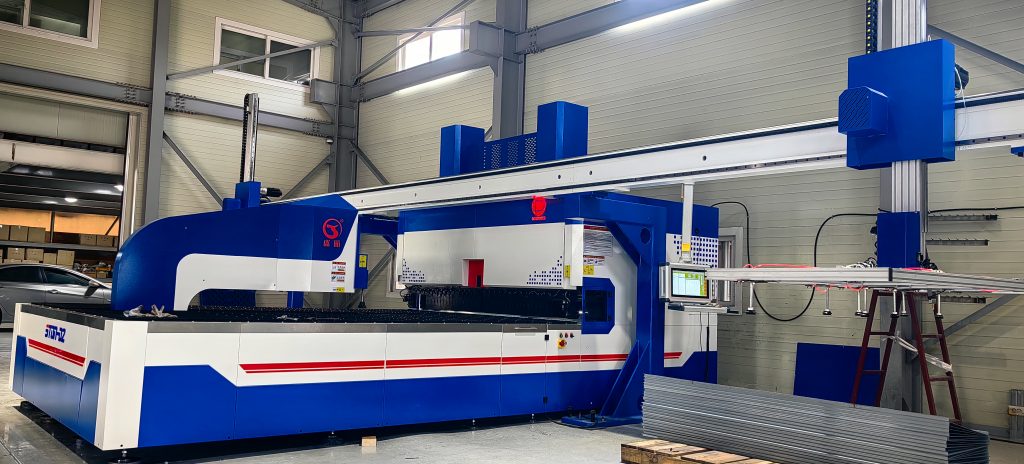
Panel bender bodies are built one of two ways: welded steel plate or cast iron. Each affects rigidity, deformation resistance, and long-term bending accuracy differently, and a supplier who owns the casting or welding process can tell you which is standard for a given frame size and which is a paid upgrade.
This is a single number every manufacturer should be able to quote without hesitation, because it’s tied to their own assembly process, not a component spec sheet. STON publishes ±0.05 mm assembly accuracy across its self-owned 20,000 m² factory. If a supplier can’t give you a specific figure — or gives you a figure that changes between conversations — that’s a sign the number came from a catalog rather than their own quality-control log.
This is where a lot of published spec sheets get vague. On STON’s own panel bender line, the same frame size is offered in both welded and cast versions, and the maximum bending thickness differs between them — a welded 1600 mm frame handles cold-rolled steel up to 1.5 mm and stainless up to 1.0 mm, while the cast version of the same frame size handles 2.0 mm cold-rolled and 1.2 mm stainless. A quote that lists one thickness number without naming the body type is quoting the better of the two numbers, not necessarily the machine you’re buying.
Automatic tool change is a meaningful cost driver, not a checkbox. Confirm whether it’s standard, optional, or absent for the model on your quote, and what the swap time is if you run mixed small-batch orders. A supplier who describes this as “fully automated” without a swap-time figure hasn’t run the feature themselves.
Panel bender capacity is usually quoted as a single top-line figure, but it changes by material family: cold-rolled steel, stainless steel, and aluminum all behave differently under the same tooling. Get the number for the material you’ll actually be forming, at the bend length you’ll actually be running, since capacity drops as bend length increases.
A dedicated spare-parts warehouse only matters if it’s stocked before you need it. Ask what’s kept on hand domestically versus what has to be shipped from the country of manufacture, and what the average lead time is for each category.
“Fast response” is not a service level. STON’s published commitment is a 1-hour response and 48-hour on-site resolution target, backed by 24/7 technical support — figures that mean something only if they’re written into the service agreement, not stated in a sales call.
For any machine entering the EU, this means documentation aligned to the Machinery Directive 2006/42/EC — currently transitioning to Regulation (EU) 2023/1230 — along with risk-assessment references to EN ISO 12100 and, where safety control systems are involved, EN ISO 13849-1. A manufacturer who’s actually gone through CE certification for their own equipment has these documents on file and can produce them same-day. A trader sourcing from multiple factories often has to chase down paperwork from whichever plant built that particular unit.
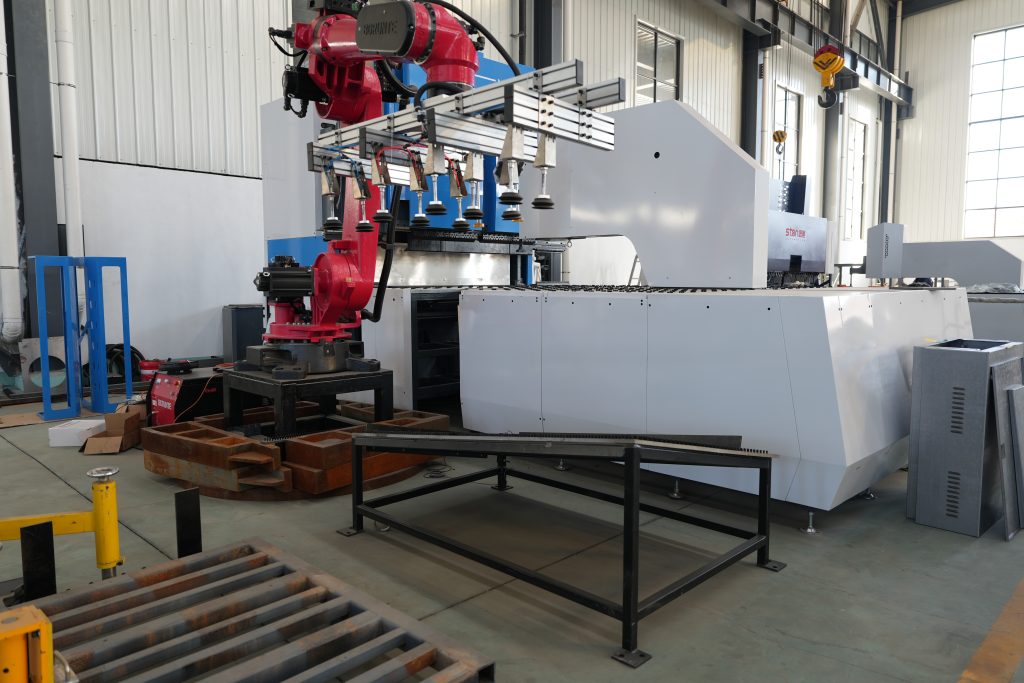
The frame-size range currently sold under STON’s A2–F2 panel bender series corresponds, at the engineering level, to individual frame sizes designated A, A+, B, B+, C, D, and D+ in STON’s internal spec sheets — bending sizes from 1000×1000 mm up to 2800×1500 mm, each available in welded-steel or cast-iron body construction.
| Marco | Max Bending Size (mm) | Body Option | CR Steel Capacity | Stainless Steel Capacity |
|---|---|---|---|---|
| A (1000) | 1000 × 1000 | Welded only | 1.5 mm | 1,0 mm |
| B (1400) | 1400 × 1250 | Welded / Cast | 1.5 mm / 2.0 mm | 1.0 mm / 1.2 mm |
| B+ (1600) | 1600 × 1250 | Welded / Cast | 1.5 mm / 2.0 mm | 1.0 mm / 1.2 mm |
| C (2000) | 2000 × 1500 | Welded / Cast | 1.5 mm / 2.0 mm | 1.0 mm / 1.2 mm |
| D (2500) | 2500 × 1500 | Welded / Cast | 1.5 mm / 2.0 mm | 1.0 mm / 1.2 mm |
| D+ (2800) | 2800 × 1500 | Welded / Cast | 1.5 mm / 2.0 mm | 1.0 mm / 1.2 mm |
Standard configuration runs 15 servo axes, with an imported all-electric servo closed-loop control system across the range. Auxiliary knives (upper, lower, or dual) and automatic tool change are available as configured upgrades rather than standard on every frame.
Not automatically — cast iron typically supports thicker material capacity on the same frame size, but it isn’t a universal upgrade for every application. Confirm the specific thickness rating for your material against the body type quoted, rather than assuming cast is superior by default.
STON does not publish a fixed price list for the A2–F2 series, since final pricing depends on frame size, body construction, and tooling configuration. Request a written quote tied to the specific model and configuration rather than a general range.
Ask for the technical file reference number tied to your specific model family, and confirm it aligns with the Machinery Directive 2006/42/EC (or Regulation (EU) 2023/1230 once fully in effect) rather than a general company-level CE claim.
Next step: if you’re comparing panel bender frame sizes against your part mix, request the material-specific thickness table for the exact body construction on your quote — not the single headline figure — before you sign.
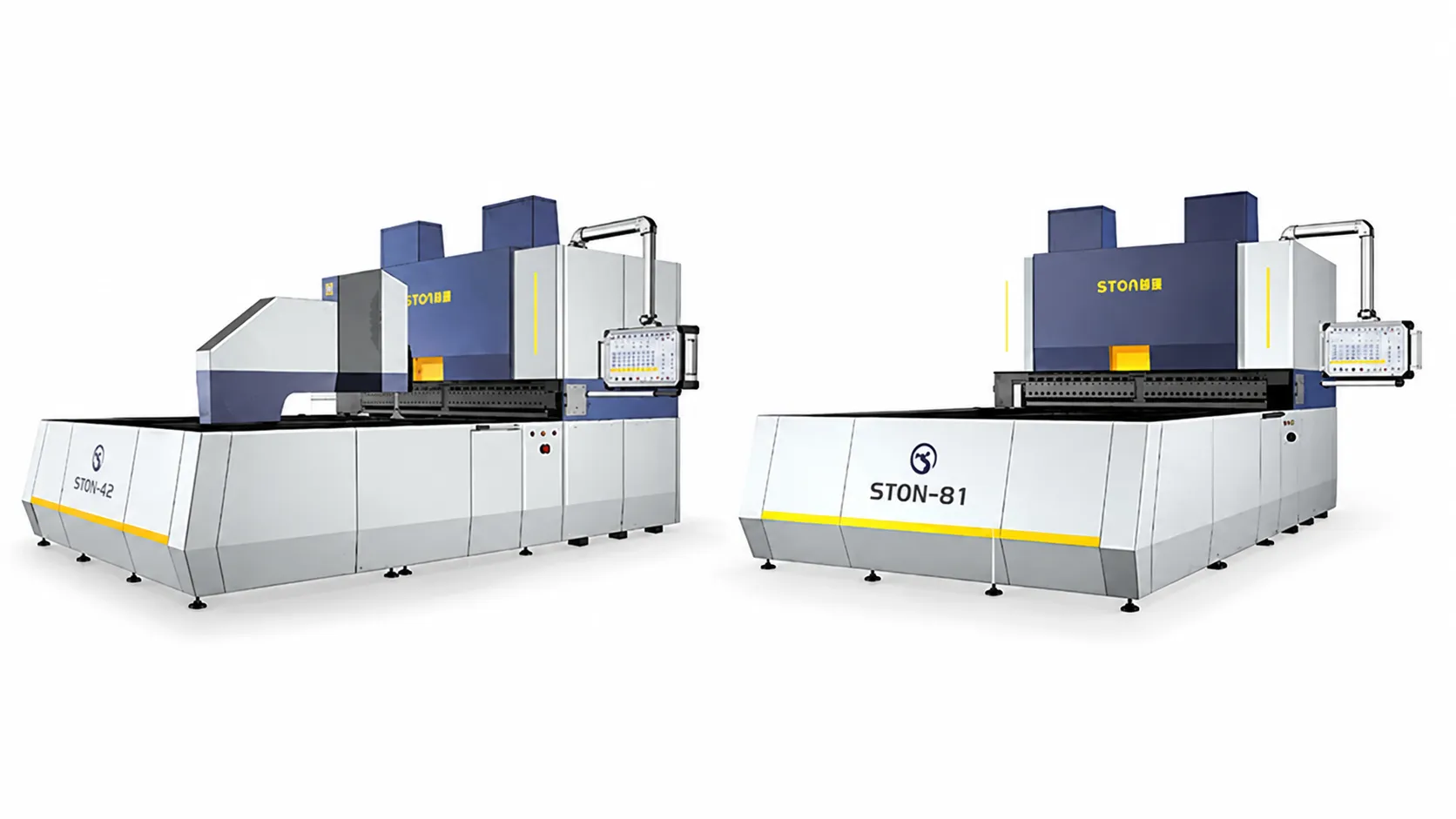

Tanto si está actualizando una línea existente como si está iniciando un nuevo proyecto, STON personalizará una solución CNC para su producción.


