Siamo responsabili della costruzione----- siamo responsabili della produzione----- siamo responsabili della formazione

A panel bender clamps a blank once and folds several sides in one cycle, best for closed enclosures up to 2800×1500mm. A press brake bends one line at a time, with tonnage up to 320T and beds to 4100mm — better for large panels, thick plate, or one-off shapes a panel bender’s tooling can’t reach.
Both machines bend sheet metal. That’s where the similarity ends.
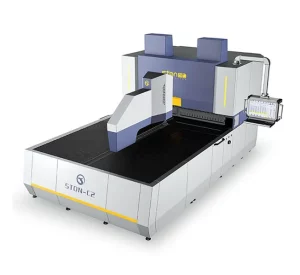
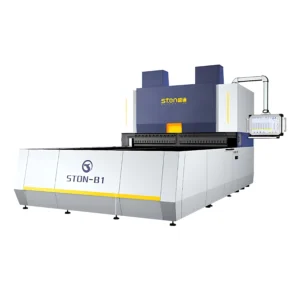
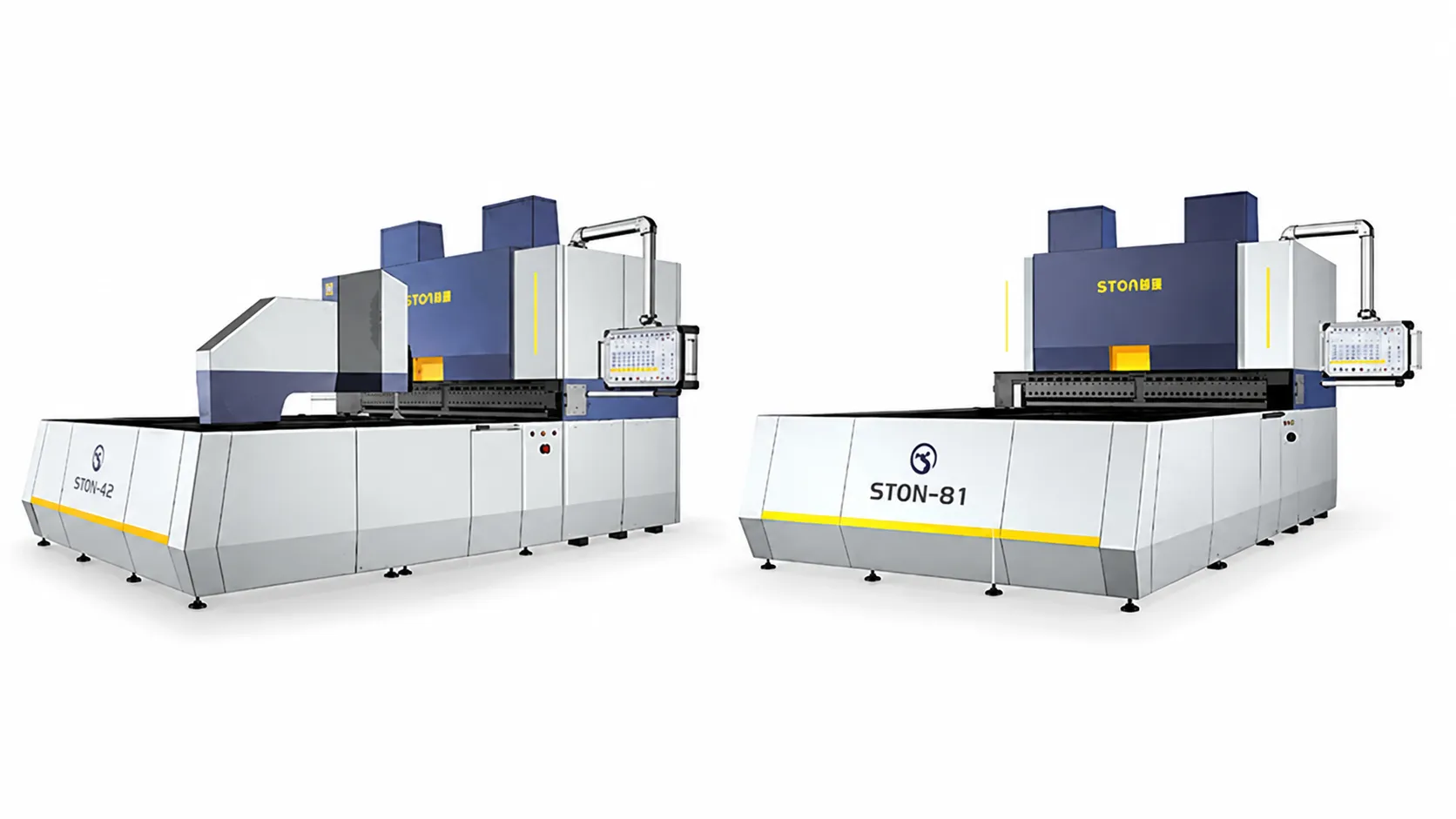
A press brake forms one straight line per stroke. The operator (or a CNC back gauge) repositions the sheet between strokes, and the part is built up bend by bend. A panel bender works the opposite way: the blank is clamped once, and a set of folding blades moves around it, closing several sides — sometimes all four — before the part is released. STON’s press-arm panel benders run up to 15 concurrently linked servo axes to do this in one clamping cycle.
That single difference drives almost everything else: which parts each machine is good at, how fast it runs, and where its size limits sit.

| Parametro | STON CNC Panel Bender (Press Arm Type, A–D+) | STON Press Brake (PBS Electro-Hydraulic Servo) |
|---|---|---|
| Max part/bed size | 1000 × 1000 mm (A) up to 2800 × 1500 mm (D+) | 1500–4100 mm bed length, depending on model |
| Max thickness at full bend | Welded body: CR 1.5 mm / SS 1.0 mmCast body: CR 2.0 mm / SS 1.2 mm | Sized by tonnage (63T–320T) rather than a flat thickness specification; capacity depends on bed length and material |
| Bending height range | 170 / 300 / 400 mm | Governed by cylinder stroke (215–315 mm) and back gauge travel, rather than a fixed height
|
The panel bender numbers above come from STON’s own Press Arm Type spec sheet; the press brake figures come from the PBS Electro-Hydraulic Servo series.
Press brakes aren’t a legacy technology the panel bender is phasing out. Two things a panel bender genuinely cannot do:
Press brakes also don’t need a “closed” part shape. A single bracket, a one-off structural bend, or a low-volume prototype run is often cheaper on a press brake, because there’s no reason to program and clamp a full-perimeter cycle for one line.
The most common mistake we hear from first-time automation buyers: assuming a piegatrice di pannelli replaces the press brake on the shop floor entirely, then discovering mid-quote that their largest SKU is a 3200mm duct panel — beyond any panel bender’s clamping envelope. Or the reverse: buying only a panel bender for a filing-cabinet line, then finding that the smallest bracket in the same product family (well under the panel bender’s 140×190mm four-sided minimum) has nowhere to go but a press brake.
The two machines aren’t a straight upgrade path from one to the other. Most sheet-metal shops running mixed product lines end up owning both — the panel bender for the high-volume closed parts, the press brake for everything at the edges of that range.
PIETRA builds both machine types in-house at its 20,000㎡ Qingdao factory rather than sourcing sub-assemblies from third parties — one reason the company can hold a published ±0.05mm assembly accuracy across both product lines and back them with 48-hour global on-site response across its 80+ export markets.
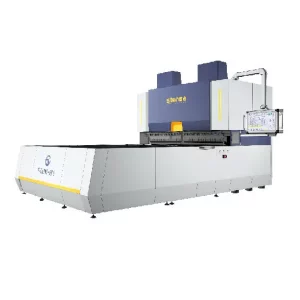
Panel Bender (Press Arm Type): five frame sizes from A (1000×1000mm) to D+ (2800×1500mm), each available in welded or cast-body construction. Cast bodies push the thickness ceiling from CR 1.5mm/SS 1.0mm up to CR 2.0mm/SS 1.2mm. All sizes ship with a native automatic loading/unloading docking port, compensation rapid-adjustment for bend accuracy, and a choice of Schneider Electric, Airtac, or Huichuan/Trio electrical components.
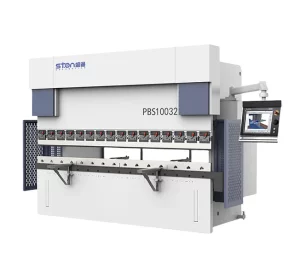
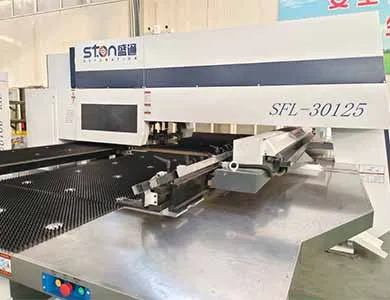
Pressa piegatrice (PBS Electro-Hydraulic Servo): thirteen tonnage/length combinations from 63T/1500mm up to 320T/4100mm, with DELEM 53T/58T/66T/69T control options (Italian ESA available). Grating-ruler closed-loop feedback and a mechanical compensation system are standard for maintaining angle consistency across the full bed length.
Neither machine has a published price list — tonnage, bed length, control system, and loading/unloading options all change the configuration, and STON quotes each build against the buyer’s part drawings and material spec. If pricing is the deciding factor between the two machine types for your product mix, request quotes for both configurations against the same part list rather than comparing list prices that don’t exist yet.
Q: Can one machine do everything a panel bender and press brake do together?
A: Not in STON’s current lineup, and generally not in the industry. The two use different clamping and blade mechanisms; a combined machine would compromise the panel bender’s clamping speed or the press brake’s tonnage range.
Q: Is a panel bender always faster than a press brake?
A: Only on parts that need the full multi-side cycle. On a single straight bend, a press brake with a fast back gauge can match or beat a panel bender’s cycle time, since the panel bender still has to run its full clamp-and-fold sequence.
Q: Does a panel bender need different tooling for every part?
A: Less than a press brake does. Panel benders use programmable blade paths rather than swapped V-dies for most standard bends, though STON still offers custom knives and auxiliary blades for special geometries.
Q: Can both machines run stainless steel?
A: Yes, with limits. STON’s welded-body panel benders cap at 1.0mm stainless at full bend; cast-body models go to 1.2mm. Press brake stainless capacity depends on tonnage and die selection rather than a fixed spec.
Q: What happens if my part exceeds the panel bender’s size range mid-production run?
A: That part routes to a press brake, even if the rest of the product family runs on the panel bender — this is exactly the mixed-fleet scenario described above under “The Misconception That Costs Buyers Money.”

Sia che stiate aggiornando una linea esistente o iniziando un nuovo progetto, STON personalizzerà una soluzione CNC per la vostra produzione.


