We're responsible for building-----we're responsible for manufacturing-----we're responsible for training

A phone clip of a clean workshop floor confirms almost nothing. It doesn’t tell you whether the panel bender on the video was built in-house or bought in from a subcontractor and rebadged, whether the CNC control system matches what’s in the quote, or whether the ±0.05mm tolerance printed on a spec sheet was ever measured on a real part. For a distributor who’s about to put their name behind a supplier relationship with their own downstream customers, that gap matters more than for a one-off buyer.
1. Request the paperwork before you book the call
Ask for the business license, export license, and current ISO 9001 and CE certificates before scheduling anything. CE marking for machinery sold into the EU is governed by Machinery Directive 2006/42/EC, and a factory that can’t produce the underlying technical file — not just the certificate PDF — is worth a second look. Cross-check the business registration number against the name on the quotation; mismatches usually mean you’re talking to a trading company, not the manufacturer.
2. Set a video window, not a fixed appointment
Give a two-hour window rather than a specific time, and don’t confirm the exact start until the morning of. A factory that stages a workshop for visitors needs advance notice to do it — an unannounced-window call removes most of that lead time without requiring you to catch anyone off guard.
3. Walk the full process chain, not just the showroom
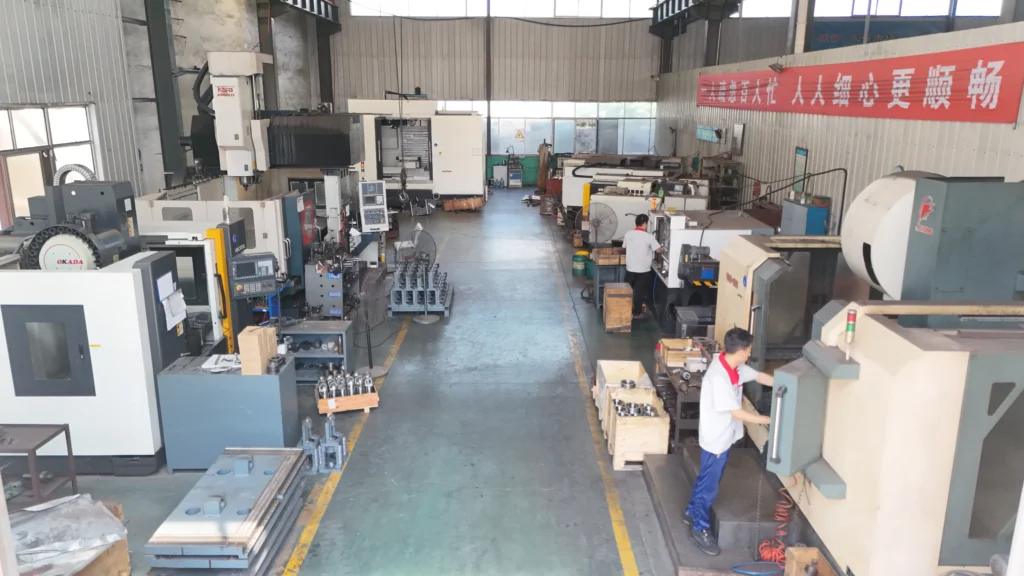
Ask the person on camera to walk, in one continuous pass, from raw steel intake through machining, welding, heat treatment, assembly, and final inspection. STON’s own layout, for reference, runs casting and heat treatment, gantry and floor-type machining, welding, and a separate assembly hall across a 20,000㎡ site — if a supplier’s walkthrough skips from “raw material” straight to “finished machine” with no visible machining or assembly floor in between, ask why.
4. Ask for a CMM report tied to a part number you can identify
A coordinate measuring machine report proves a dimension was actually measured, not just claimed. Request one for a specific bed or frame component on the model you’re considering, with the part number visible in the report header. A factory with a functioning quality lab can usually pull this within a day; one that stalls or sends a generic template is telling you something.
5. Send your own drawing for a sample-part run
This is the step most remote audits skip, and it’s the one that actually validates forming accuracy. Send a drawing of a part your own customers actually bend — not the factory’s demo piece — and ask for a video of it being formed on the machine, plus the part shipped to you for measurement. If the quoted machine is a panel bender rated for CR 1.5mm at full bend, don’t send a drawing at 2.5mm and expect it to pass; match the material and thickness to the model’s rated capacity first.
6. Verify the control system and electrical components against the quote
Ask the operator to open the control cabinet on camera and read out the servo drive and motor brand plates. Quotes for CNC panel benders often specify the control system and electrical brand (Schneider, Siemens, or a named servo brand, for example) separately from the mechanical spec — confirm what’s actually installed matches what was written down, since this line item is where quotes diverge most between suppliers quoting the same bending length.
7. Get the service commitment in writing before you pay a deposit
Response-time and on-site resolution commitments are easy to promise verbally and easy to forget later. Get them into the contract or PO, not just the sales chat — including who covers travel cost for an on-site technician visit if one becomes necessary.
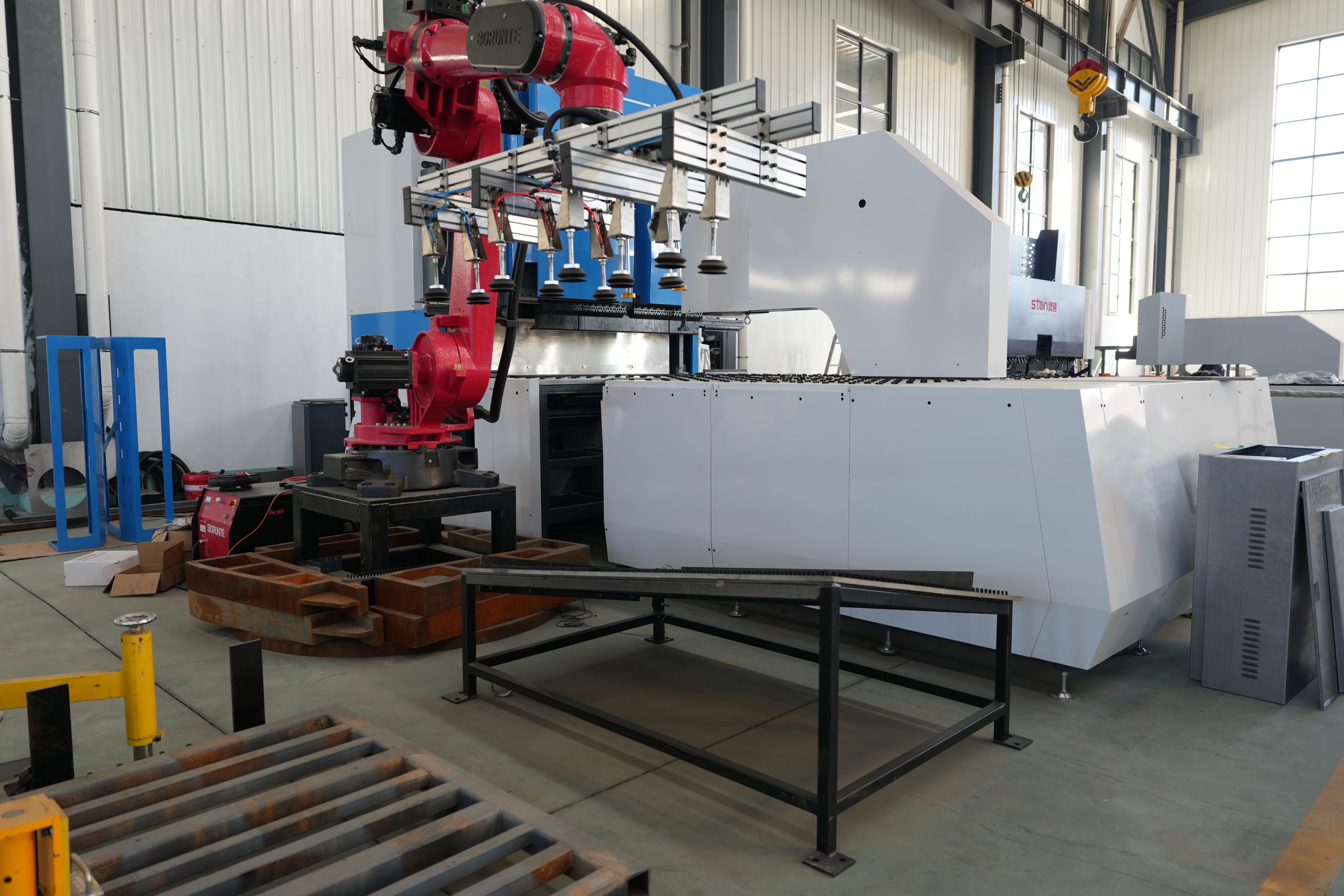
This is the series most distributors ask about first, so it’s worth knowing which numbers to request during step 5 above. STON’s internal spec sheet for this bending-arm-type series (referenced under the A/B/C/D bed designations) lists the following:
| Model | Max. Bending Size (mm) | Max. Bending Height (mm) | Max. Thickness at Full Bend | Servo Axes | Bed Type |
|---|---|---|---|---|---|
| A (1000) | 1000 × 1000 | 170 / 300 / 400 | CR 1.5 mm / SS 1.0 mm | 15 | Welded |
| B (1400) | 1400 × 1250 | 170 / 300 / 400 | Welded: CR 1.5 mm / SS 1.0 mm; Cast: CR 2.0 mm / SS 1.2 mm | 15 | Welded or cast |
| C (2000) | 2000 × 1500 | 170 / 300 / 400 | Welded: CR 1.5 mm / SS 1.0 mm; Cast: CR 2.0 mm / SS 1.2 mm | 15 | Welded or cast |
| D (2500) | 2500 × 1500 | 170 / 300 / 400 | Welded: CR 1.5 mm / SS 1.0 mm; Cast: CR 2.0 mm / SS 1.2 mm | 15 | Welded or cast |
| D+ (2800) | 2800 × 1500 | 170 / 300 / 400 | Welded: CR 1.5 mm / SS 1.0 mm; Cast: CR 2.0 mm / SS 1.2 mm | 15 | Welded or cast |
A detail worth asking about directly on the video call: cast-bed versions carry a higher rated full-bend thickness than welded-bed versions on the same model size (2.0mm cold-rolled versus 1.5mm, for stainless 1.2mm versus 1.0mm). If your part mix runs thicker stainless, confirm which bed type is actually quoted before comparing price against a competing offer — a welded-bed unit priced lower isn’t a like-for-like comparison against a cast-bed quote at the same model number. Ask, too, whether the unit includes the compensation adjustment system for angle correction along the bending line; it’s listed as a standard feature on STON’s version but isn’t universal across suppliers, and it’s the kind of line item that gets quietly dropped from a “budget” quote.
Generic third-party remote-audit services are built to answer one question across any product category: does this factory exist and is it roughly what it claims to be. That’s useful as a baseline screen, but for CNC equipment it stops short of the question that actually determines whether the machine works for you — can it hold tolerance on your material at your thickness. A checklist-style audit run by a generalist inspector will confirm floor space, staff headcount, and certificate validity; it generally won’t include a sample-part run against your drawing, because that requires product-specific engineering input the inspector doesn’t have. If you use a third-party audit at all, treat it as step 1–4 above, and still insist on step 5 directly with the factory’s engineering team.
Steps 1–4 (documents, video walkthrough, CMM report) typically run one to two weeks depending on how quickly the factory can pull a report for the specific part you request. Step 5 (sample-part validation) adds time for the part to be formed, shipped, and measured — plan for two to four weeks total before a purchase decision.
For a first order above a modest value, or before signing a distributor agreement, an on-site visit remains the more thorough check — a remote audit reduces risk, it doesn’t eliminate the value of physically handling the machine and meeting the engineering team.
Ask why specifically. A reasonable factory may push back on covering material and shipping cost for a full-size sample; a smaller test coupon or a video-only trial run on the drawing is a fair compromise. Outright refusal to run any test against your own part, on any terms, is a stronger warning sign than refusing a live video call.
Not necessarily. CE marking under Machinery Directive 2006/42/EC is largely self-declared by the manufacturer against a technical file, not always verified by an independent auditor on-site. That’s part of why requesting the technical file itself, not just the certificate, matters in step 1.A
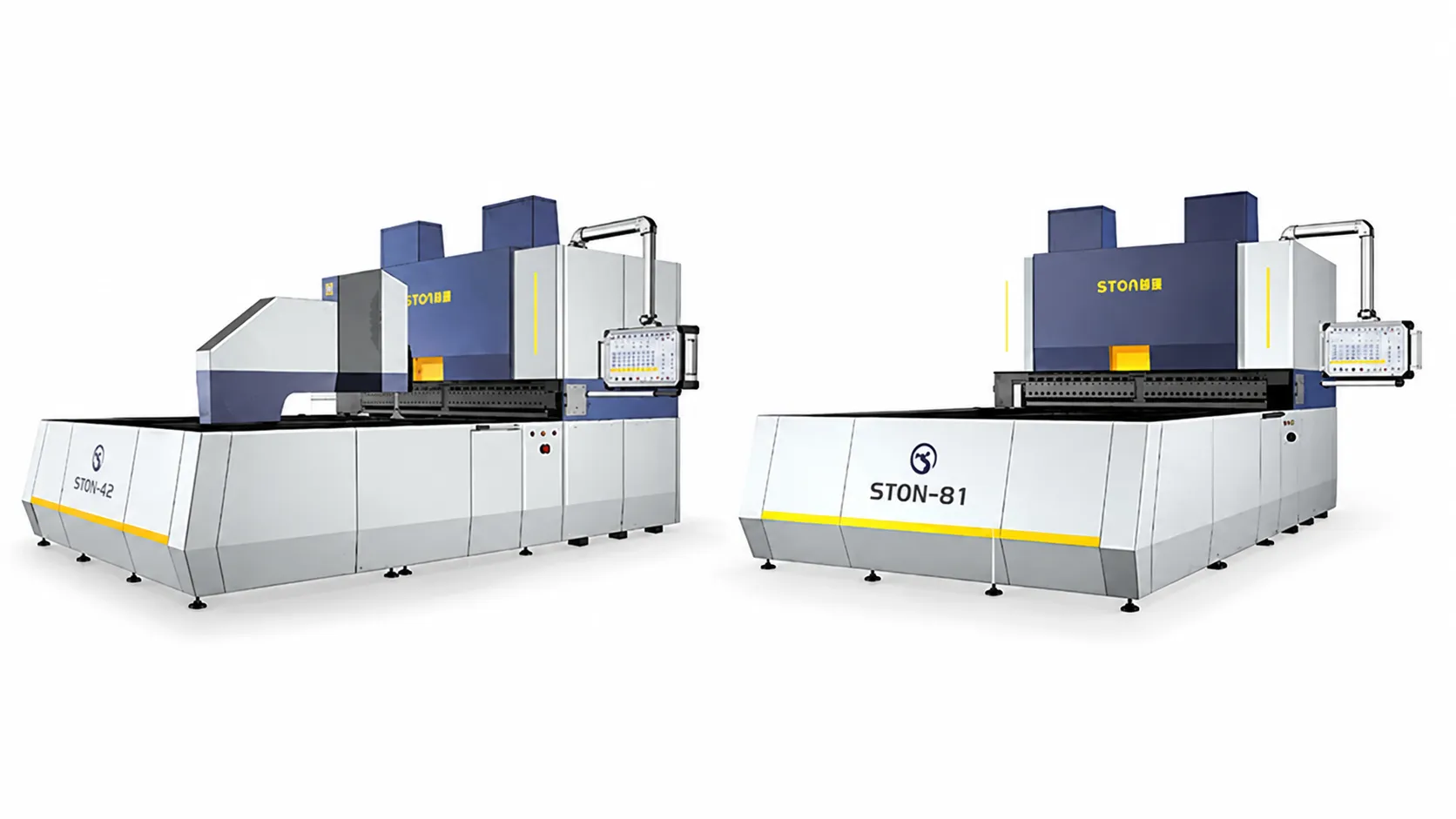

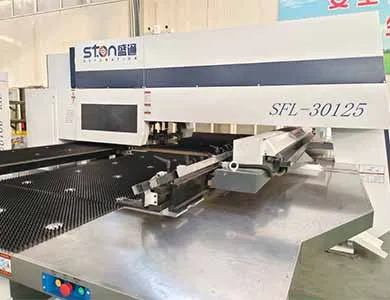
Whether you're upgrading an existing line or starting a new project, STON will customize a CNC solution for your production.


