우리는 건설을 책임집니다-----우리는 제조를 책임집니다-----우리는 교육을 책임집니다.

Manual bending takes skill, strength, and time. One wrong bend can ruin a good sheet metal part. When orders grow, this becomes a serious factory problem. A CNC panel bender machine helps automate bending, reduce errors, and produce stable panels with less operator pressure.
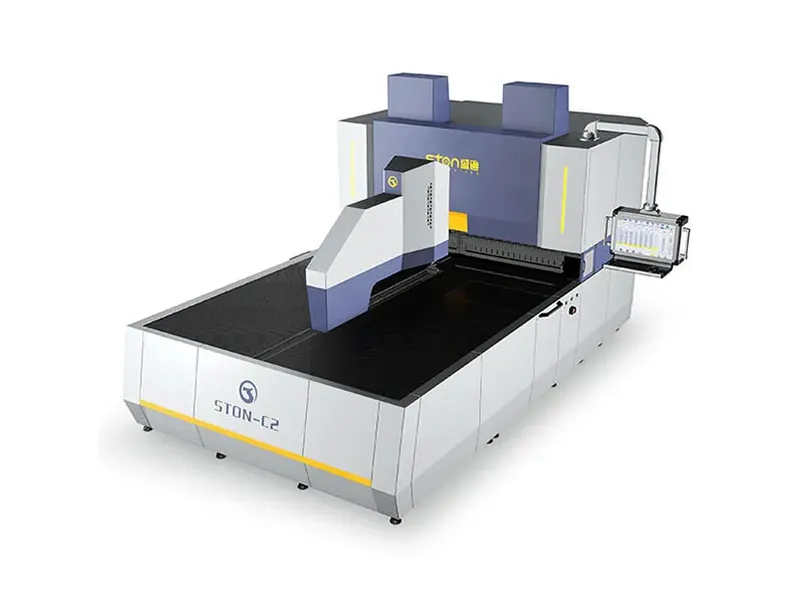
A CNC panel bender works by clamping a metal sheet on the worktable, positioning it with a CNC system, and using upper and lower bending blades to fold the edges. Unlike a traditional press brake, the machine supports the workpiece during the bending process, making it ideal for panel-shaped sheet metal parts.
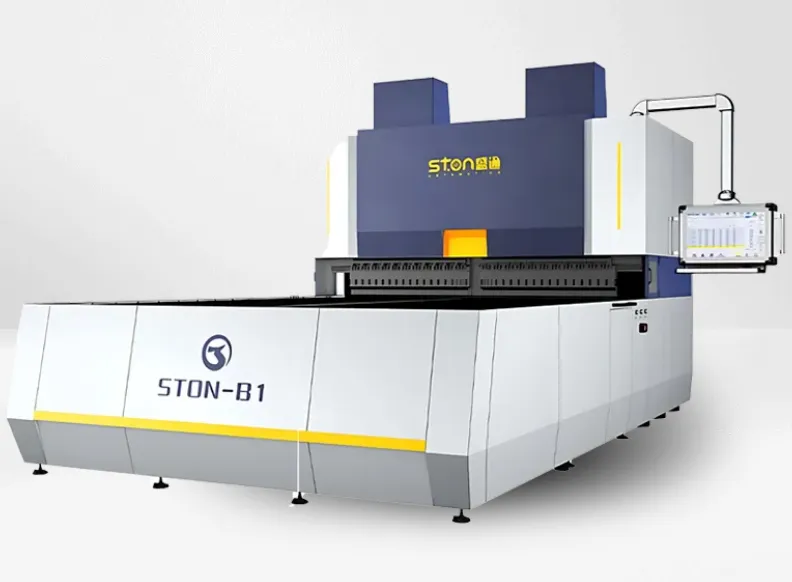
A CNC panel bender machine is automatic bending equipment used to bend sheet metal panels into doors, covers, enclosures, boxes, shelves, appliance panels, and many other metal parts. It is also called a panel bending machine, CNC panel bending machine, automatic panel bender, or panel bending center.
A panel bender is designed to handle flat sheet metal and bend its edges into accurate shapes. The machine clamps the workpiece, controls the bend angle, and uses bending blades to fold the metal sheet. This makes the machine very useful for modern sheet metal production.
In simple words, a panel bender turns a flat sheet into a formed part. It does this with less manual intervention than traditional bending machines. For factories that make repeated metal panels, the panel bender becomes a strong productivity tool.
To understand how a panel bender works, imagine a flat metal sheet placed on a table. The machine first positions the sheet. Then it secures the metal sheet with a clamp. After that, the upper and lower bending blades move to fold the edge of the sheet into the required bending angle.
A basic bending process usually follows these steps:
The 패널 벤더 operates with controlled movement during the bending process. This gives the factory better control over the bending process and helps operators monitor the bending process more easily.
For repeated parts, the machine can run the same program again and again. This is why panel benders deliver stable bend quality for cabinet doors, HVAC panels, appliance covers, and metal furniture parts.

CNC means computer numerical control. In a CNC panel bender, the control system stores the bending program. It controls the bend angle, bend sequence, blade movement, clamp action, and sometimes part rotation.
This is important because sheet metal bending needs repeatability. A human operator can make good parts, but people get tired. Different operators may bend slightly differently. A CNC system helps reduce that variation.
CNC control can improve:
An advanced CNC 패널 벤더 can automate many bending steps. The operator does not need to guess the order. The machine follows the program. This is one reason automatic panel bending is useful for factories with repeated products.
A panel bender vs press brake comparison is very useful for industrial buyers. Both machines bend sheet metal, but they work in different ways.
A traditional press brake uses a punch and die. The punch pushes the sheet into the die to create the bend. The operator often supports the sheet by hand, especially for large panels. This makes a press brake flexible, but it can require more skill.
A panel bender uses bending blades to fold the sheet edge while the sheet stays supported on the table. This is different from a traditional press brake. The panel bender is better for repeated panel-shaped parts, while CNC press brakes are still strong for flexible bending work and thicker parts.
A panel bender could be the better machine if your factory makes electrical cabinet doors, HVAC panels, appliance shells, or metal furniture panels every day. A press brake may be better if you bend many different shapes, thick plates, or special custom parts.


Panel benders are used for many sheet metal products that need clean, repeatable edge bends. The machine is especially strong when the product has several flanges or box-like shapes.
Common applications include:
A sheet metal panel often needs more than one bend. With traditional bending, the operator may need to lift, rotate, and support the part many times. With a CNC panel bender, the machine can automate more of this work.
This makes panel benders ideal for modern sheet metal fabrication where speed, stable quality, and lower labor dependence are important.
Panel bender machines can process a range of metal materials. Common options include mild steel, stainless steel, aluminum, galvanized sheet, cold-rolled steel, and painted panels. The exact range depends on the machine model, material thickness, bending force, bend length, and part design.
For example, stainless steel is strong and often used in kitchen equipment, appliances, and clean industrial products. Galvanized sheet is common in HVAC and electrical cabinets. Aluminum is light and useful for panels that need lower weight.
Before choosing a machine, buyers should send material details to the supplier. The bending machine needs to match thickness, strength, coating, and surface finish. This helps ensure better bend quality.
The tool system has a direct effect on bend quality. In a panel bender, the bending tool, clamp, upper blade, lower blade, and positioning system all affect the final result.
The clamp must hold the sheet firmly. If the sheet moves, the bend angle may change. The bending blade must move smoothly. If the tool is worn or poorly aligned, the bend may look uneven.
Important tool points include:
A good tool system helps the panel bender provide high-precision bending. It also reduces scratches, improves part appearance, and helps the machine handle complex bending.
For factories producing visible products such as appliance panels, stainless steel covers, and metal furniture, surface quality is not a small detail. It is part of the product value.
The advantages of CNC panel bending are clear for factories that make repeated sheet metal parts. The machine helps automate work, reduce manual intervention, improve productivity, and create more stable bends.
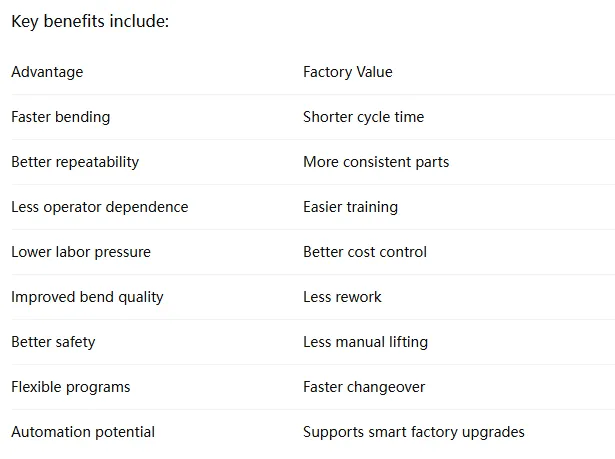
Panel bender machines are useful when a factory wants to move from manual bending to automated sheet metal bending. The machine can help operators handle more work with less physical effort.
For high-volume production, the benefit is even stronger. A CNC panel bender can help improve productivity and support stable output across shifts.
A panel bender helps sheet metal production by making the bending operation faster and more repeatable. It also reduces manual lifting and part rotation. This is important for large panels and repeated orders.
In a smart sheet metal factory, the process may look like this:
Laser cutting → turret punching → CNC panel bending → welding or fastening → assembly → inspection
The panel bender fits after cutting and punching. It turns flat blanks into formed metal panels. When the cutting machine and bending machine work together, the factory can improve the whole workflow.
STON often helps customers build this kind of process. A factory may start with one machine. Later, it may add laser cutting, panel bending, press brake bending, or automatic loading and unloading. Step by step, the factory becomes smarter.
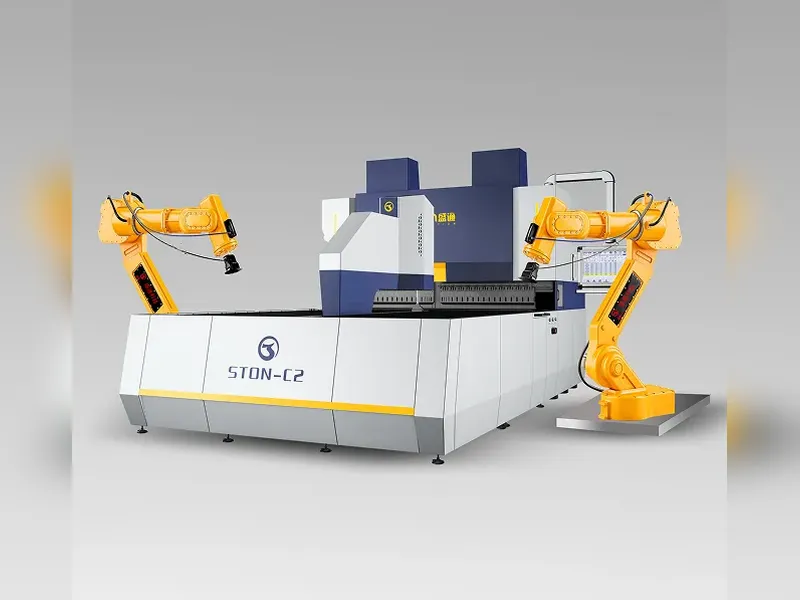
An automatic panel bender reduces manual intervention by using CNC programs, automatic positioning, clamping, and bending. Some machines also use robotic loading, automatic flipping, or automatic unloading.
This means the operator does not need to hold the sheet through every bend. The machine handles more of the movement. It can also follow programmed bend sequences, which reduces mistakes.
In some advanced systems, the machine automatically rotates or positions the sheet for different bends. This is useful for complex panels and high-volume production.
Manual work does not disappear completely. Operators still load material, check quality, and manage the machine. But the hard, repeated bending work becomes easier and more stable.
STON is a China-based CNC sheet metal machinery manufacturer. We provide panel benders, turret punch presses, press brakes, laser cutting units, and automated production lines. We are positioned as a sheet metal automation solution provider for global manufacturers.
STON panel benders are designed for sheet metal fabricators, electrical cabinet factories, HVAC manufacturers, appliance producers, metal furniture makers, and machinery distributors. These users need stable machines, fast support, practical automation, and clear technical guidance.
Useful STON internal links:
When you send STON your drawings, material data, panel size, thickness range, and output target, our team can help you choose a panel bender, press brake, or full automatic production line that best fits your factory.
When you send STON your drawings, material data, panel size, thickness range, and output target, our team can help you choose a panel bender, press brake, or full automatic production line that best fits your factory.
Panel benders are designed for modern sheet metal automation. They can connect with laser cutting machines, turret punch presses, automatic loading systems, robotic units, and production lines.
A smart workflow may look like this:
CAD design → nesting → laser cutting or punching → CNC panel bending → welding or fastening → assembly
This workflow reduces waiting time between machines. It also helps managers control production more clearly. When machines connect well, the factory can produce more with fewer manual steps.
For global manufacturers, this is the real value. The goal is not only to buy one machine. The goal is to build a smarter, cleaner, and more efficient sheet metal factory.
A CNC 패널 벤더 works by positioning the sheet metal, clamping it, and using upper and lower bending blades to fold the edges according to a CNC program.
A panel bender is used to bend sheet metal panels for electrical cabinets, HVAC panels, appliance shells, metal furniture, stainless steel equipment, server racks, and metal enclosures.
A panel bender is better for repeated panel-shaped parts. A press brake is better for thick parts, flexible jobs, and special profiles. Many factories use both.
Yes. A panel bender can bend stainless steel if the thickness and part size match the machine capacity. Surface protection and correct settings are important.
It needs trained operators, but it usually depends less on highly skilled manual bending workers than traditional bending methods. CNC programs help reduce human error.
Choose the right CNC panel bender by checking your part drawings, material thickness, sheet size, bend length, flange size, daily output, automation needs, and factory layout.
기존 라인을 업그레이드하든 새 프로젝트를 시작하든 STON은 고객의 생산에 맞는 CNC 솔루션을 맞춤 제작합니다.