Somos responsables de la construcción-----somos responsables de la fabricación-----somos responsables de la formación

Manual sheet metal production can slow down cabinet and enclosure factories. Repeated loading, sorting, punching, and bending create delays, errors, and higher labor costs.
An automatic sheet metal production line helps cabinet and enclosure manufacturers connect cutting, punching, bending, sorting, stacking, and loading systems into one smoother workflow. The right line should match part size, material type, production volume, automation level, factory layout, and future expansion needs.
Cabinet and enclosure manufacturing needs stable accuracy. A small error in a door panel, side plate, mounting board, or ventilation hole can affect assembly quality. For electrical cabinets, filing cabinets, telecom enclosures, EV charging cabinets, and laboratory equipment, repeatability matters every day.
That is why many factories are moving from single-machine production to connected sheet metal automation. Instead of using one machine for cutting, another for punching, another for bending, and many workers for transfer, an automatic production line helps the whole process run with fewer breaks.
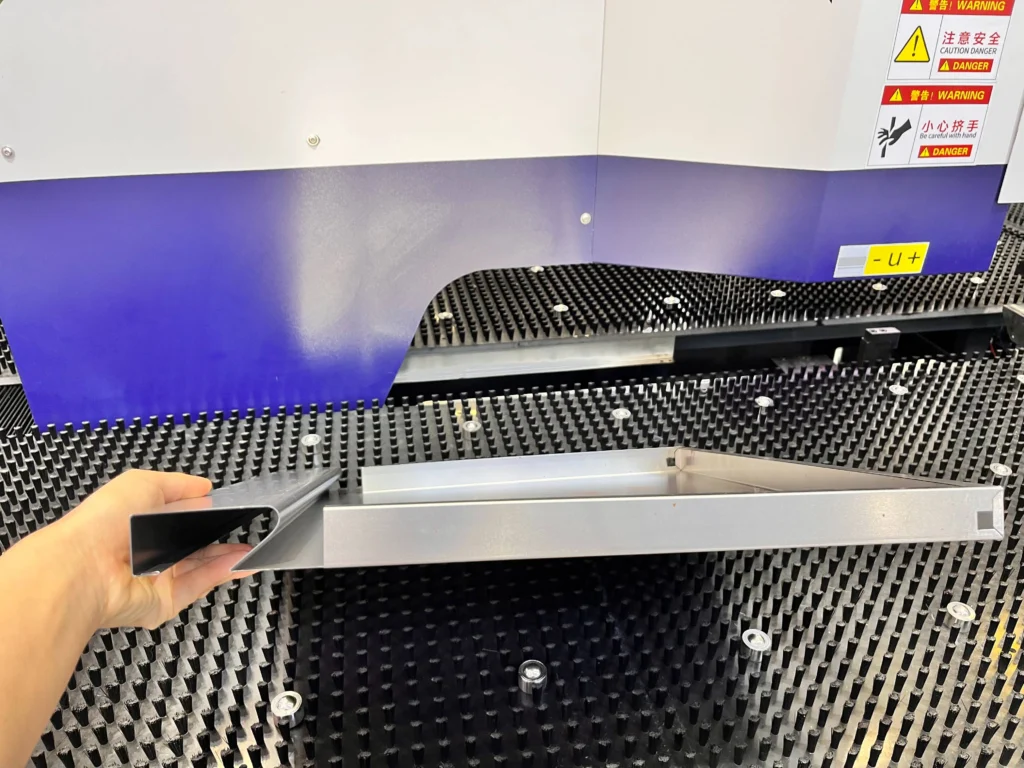
For STON, the goal is not to make every factory buy the same line. The goal is to help buyers choose a practical automation solution based on real parts, real output, and real workshop conditions.
Many buyers want automation, but they may not know what should be included in the line. A clear process plan is the first step.
An automatic sheet metal production line is a connected system that can include cutting, punching, bending, loading, unloading, sorting, stacking, and material transfer equipment for sheet metal parts.
A production line is different from a single CNC machine. A single machine completes one main task. A production line connects several tasks together. For example, a cabinet factory may need laser cutting, turret punching, panel bending, and automatic stacking. If each step runs separately, workers must move parts many times. This creates waiting time and quality risks.
An automatic line can reduce these problems. It can use a loading system to move material into the machine. It can use a CNC turret punch press to process holes, louvers, and forming features. It can use a panel bender to bend cabinet doors or enclosure panels. It can use a robot or truss system to move parts between stations. It can also use a stacking unit to organize finished parts.
For B2B buyers, the key is not the number of machines. The key is whether the line solves the factory’s bottleneck. A small job shop may only need automatic loading and unloading for one panel bender. A large electrical cabinet plant may need cutting, punching, bending, and sorting in one planned system.
Not every factory needs the highest automation level. The best candidates are factories with repeated parts, large output, and high labor pressure.
Sheet metal automation is most useful for factories that produce cabinets, enclosures, HVAC parts, metal furniture, appliance panels, door frames, and similar sheet metal products in repeated batches.
Electrical cabinet manufacturers are a good example. They often produce doors, side panels, back panels, mounting plates, and ventilation panels. These parts require cutting, punching, bending, and accurate positioning. If workers load and transfer every part by hand, the process can become slow.
Telecom and power enclosure makers also need stable part quality. Their products often include mounting holes, ventilation slots, hinges, locks, and folded edges. A CNC punch press and automatic bending line can help keep these details consistent.
Metal furniture and racking plants also benefit from automation. They may process shelves, frames, drawer parts, side plates, and support panels. These parts often have repeated hole patterns and bending requirements. Automation helps reduce manual sorting and improve output.
HVAC ducting producers, appliance plants, kitchenware factories, door and frame factories, and EV charging enclosure makers can also use sheet metal automation. Their products may differ, but their needs are similar: faster production, better repeatability, lower labor cost, and easier process control.

A production line should follow the real part process. Buyers should not choose machines only because they look advanced.
Buyers should match machines with the actual production steps, including cutting, punching, forming, bending, sorting, stacking, and final assembly needs.
The first step is to study the part drawing. Does the part need holes? Does it need louvers? Does it need embossing? Does it need four-side bending? Does it need clean visible surfaces? These questions decide which machines should be included.
A laser cutting machine is useful for flexible outer shapes and profiles. A turret punch press is useful for repeated holes, slots, louvers, and forming features. A CNC panel bender is useful for automatic multi-side bending of panels, doors, boxes, and cabinet parts. A press brake may still be useful for thicker material or more flexible bending jobs.
| Production Need | Recommended Equipment |
|---|---|
| Flexible cutting shapes | CNC laser cutting machine |
| Repeated holes and louvers | CNC turret punch press |
| Cabinet doors and enclosure panels | CNC panel bender |
| Thick plate bending | CNC press brake |
| Less manual handling | Automatic loading and unloading system |
| Batch organization | Sorting and stacking system |
| Full factory upgrade | Automatic sheet metal production line |
The best line may combine several of these systems. For example, an enclosure factory may use laser cutting for profiles, turret punching for ventilation holes, and a panel bender for cabinet doors. A metal furniture factory may use punching and bending more often. A door frame factory may need longer part handling and stable bending accuracy.
The line should serve the product, not the other way around.
Some buyers focus only on cutting or bending speed. But many delays happen between machines, not inside the machine.
Automatic loading, unloading, sorting, and stacking systems reduce manual transfer, improve part flow, and help the whole production line run more smoothly.
A fast machine does not always mean fast production. If workers spend too much time loading sheets, removing parts, sorting panels, and moving pallets, the real output may still be low. This is why material handling is important.
Automatic loading can feed material into a laser cutter, punch press, or panel bender. Automatic unloading can remove finished parts or blanks. A sorting system can separate parts by order, size, or next process. A stacking system can place parts neatly for bending, assembly, or packaging.
For cabinet and enclosure factories, sorting is especially important. One product may include many different panels. If the wrong panel goes to the wrong station, the assembly team loses time. A better sorting and stacking process helps reduce confusion.
These systems also improve safety. Workers do not need to lift heavy or sharp metal sheets as often. This can reduce fatigue and lower the risk of handling accidents.
From a buyer’s view, automation should not stop at the main machine. If loading and unloading are still fully manual, the factory may not get the full benefit of automation. A balanced line should improve both processing speed and material movement.
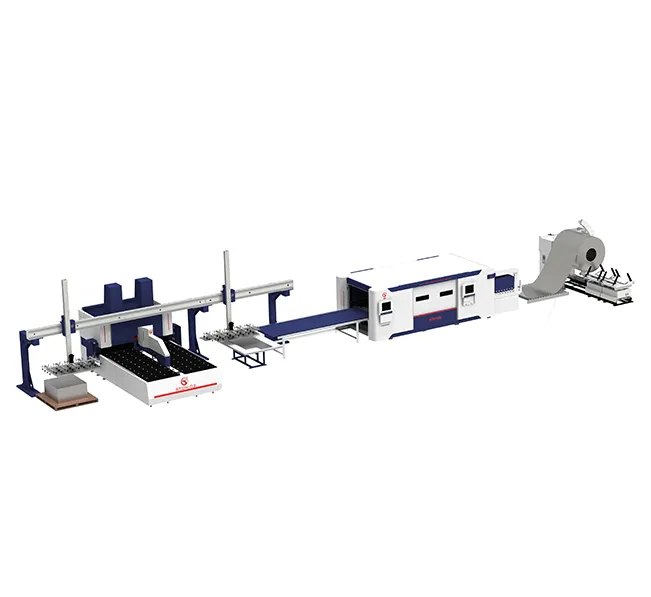
A good línea de producción automática starts with clear data. Without details, the supplier can only give a rough answer.
Buyers should check part drawings, material type, thickness range, production volume, workshop layout, automation level, operator skill, local power, and after-sales support before choosing a line.
Before asking for a solution, buyers should prepare several key details.
| Information | Why It Matters |
|---|---|
| Product drawings | Shows cutting, punching, and bending needs |
| Material type | Affects machine selection and tooling |
| Thickness range | Affects punching force and bending method |
| Part size | Affects machine model and line layout |
| Daily output | Helps decide automation level |
| Workshop layout | Decides machine position and transfer route |
| Current bottleneck | Shows where automation should start |
| Labor condition | Helps estimate handling and operation needs |
| Local power and climate | Affects machine configuration |
| Service needs | Affects commissioning, training, and spare parts planning |
Buyers should also think about future orders. If the factory may expand from cabinet panels to enclosure systems, the line should leave room for upgrades. If the buyer may add punching or panel bending later, the system layout should support future integration.
Total cost of ownership is also important. A low purchase price may not be the best choice if the line is hard to operate, difficult to maintain, or unable to support future products. A practical line should balance price, durability, uptime, energy use, service, and long-term productivity.
A standard machine may not fit every factory. Different buyers need different automation routes.
STON can support custom sheet metal automation solutions by reviewing drawings, material data, workshop layout, production goals, machine configuration, tooling needs, and after-sales requirements.
STON works as a Sheet-Metal Automation & CNC Fabrication Equipment Manufacturer. We focus on CNC panel benders, turret punch presses, press brakes, laser cutting systems, automatic loading and unloading systems, and customized production lines.
For a cabinet factory, we may suggest a solution around panel bending and automatic loading. For an enclosure maker, we may combine laser cutting, turret punching, and bending. For a metal furniture plant, we may focus on repeated punching, stacking, and bending efficiency. For a system integrator or distributor, we may prepare flexible configurations for different end users.
Customization may include machine layout, tooling plan, line speed, loading method, safety protection, local power configuration, operator training, and spare parts support. This is important for overseas buyers because installation and long-term service affect the real value of the equipment.
We do not suggest choosing automation only by catalog pictures. A better approach is to share part drawings, production targets, and workshop information first. Then the line can be planned around real customer needs.
The right automatic production line should help your factory produce faster, with fewer mistakes and better control.
Is an automatic production line only suitable for large factories?
No. Large factories may need a complete line, but smaller factories can start with automatic loading, unloading, or one connected bending system. The right automation level depends on output and budget.
Can the line include both turret punching and panel bending?
Yes. A sheet metal automation line can integrate turret punching, panel bending, laser cutting, sorting, and stacking when the workflow and layout are planned correctly.
What is the biggest benefit of sheet metal automation?
The biggest benefit is smoother production flow. Automation reduces manual transfer, improves repeatability, and helps machines work together instead of operating as separate islands.
How do I know which machine should come first?
You should start from your part drawings and current bottleneck. If cutting is slow, start with cutting automation. If bending limits output, focus on panel bending or press brake automation.
Can STON customize the line for different products?
Yes. STON can customize the line according to material, part size, production volume, workshop layout, automation goals, tooling needs, and local working conditions.
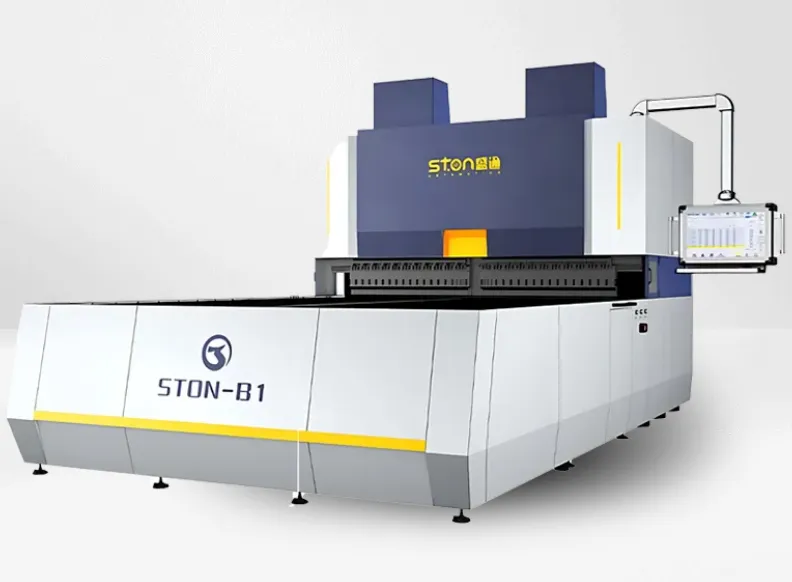
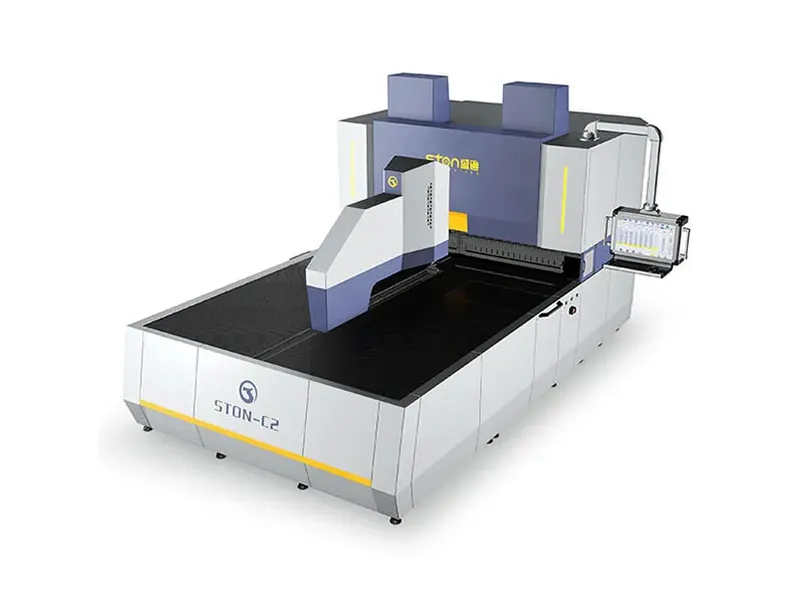
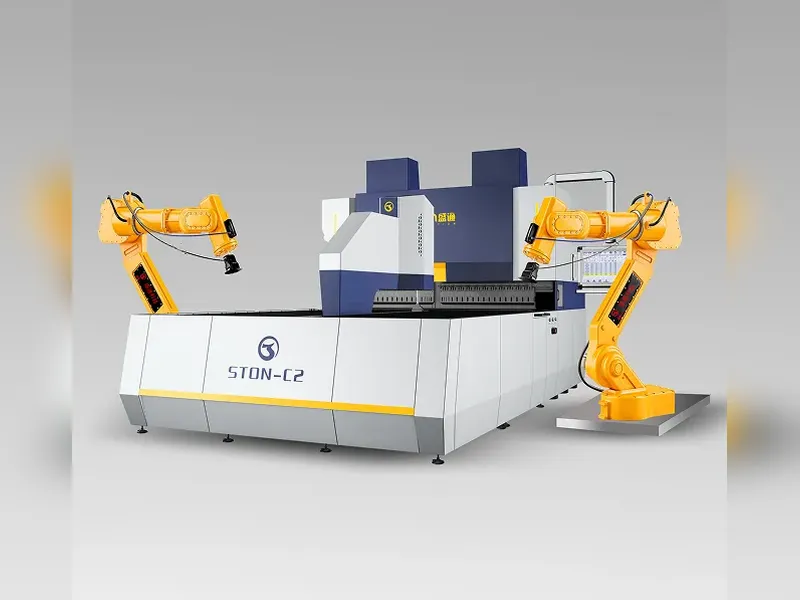
Tanto si está actualizando una línea existente como si está iniciando un nuevo proyecto, STON personalizará una solución CNC para su producción.


