نحن مسؤولون عن البناء-----نحن مسؤولون عن التصنيع-----نحن مسؤولون عن التدريب

Manual punch work can slow production, create uneven holes, and make every batch harder to control. When small errors stack up, factories lose time, material, and trust. CNC punching gives sheet metal manufacturers a faster, cleaner, and more repeatable way to produce metal parts.
Sheet metal punching is a manufacturing process that uses a punch and die to form holes, slots, louvers, embossing marks, and other shapes in metal sheets. For modern sheet metal fabrication, a CNC punching machine or turret punch press improves speed, accuracy, repeatability, and cost control for cabinets, enclosures, doors, HVAC panels, and industrial metal components.
Article Outline
Sheet metal punching involves using force to push a punch tool through a metal sheet. The punch works with a matching die set, so the material breaks or forms into the desired shape. This process can form holes in sheet metal, make slots, create louvers, add marks, or prepare panels for later bending and assembly.
In simple words, punching is used when a factory needs repeated and accurate features in sheet metal. These features may include a round hole for wiring, long slots for ventilation, mounting holes for electrical cabinets, or dense hole patterns for screens and filter panels. The punch makes the shape. The die supports the metal. The machine controls the motion.
In modern sheet metal fabrication, punching is not only about making holes. It is part of a larger sheet metal manufacturing process. A part may first go through cutting, then a sheet metal punch, then sheet metal bending, metal folding, welding, painting, and final assembly. When the punch stage is stable, the next steps become easier.
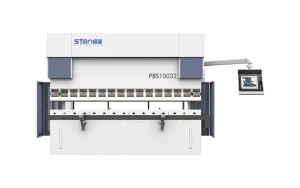
A sheet metal punch uses a punch and die to separate or shape the material. The punch moves downward with force. The die set supports the metal sheet from below. When the punch reaches the metal, the material is pressed, stretched, and then sheared. The result is a clean shape that matches the punch tool.
This sounds simple, but good punching needs control. The punch tool must match the hole size, sheet thickness, material type, and production goal. A wrong punch and die set can lead to rough edges, poor punching results, fast tool wear, or damage to the sheet metal. Tiny details matter. Metal is not very forgiving.
For example, a round hole may look basic, but its quality depends on clearance, punch speed, tool sharpness, material hardness, and machine rigidity. A well-designed sheet metal punching tool helps factories make repeatable metal parts without constant manual correction.
| Element | Function in Punching |
|---|---|
| Punch | Pushes into the metal sheet to create the shape |
| Die | Supports the sheet and receives the punch |
| Stripper | Holds the sheet flat during the punching operation |
| CNC table | Moves the metal sheet to the correct position |
| البرج | Holds multiple punch tools for fast tool changes |
The sheet metal punching process usually starts with a drawing or program. The operator or engineer defines the hole patterns, shapes, part size, and punching order. Then the metal sheet is loaded onto the punching machine. The CNC system moves the sheet to each position and controls the punch operation.
During the punching operation, the punch and a die work together. The punch presses down. The die supports the material. The machine forms the hole, slot, louver, or special shape. Then the table moves to the next position. This repeats until all required features in sheet metal are completed.
For a simple product, this may include only a few holes. For a dense screen, the machine may punch hundreds or thousands of repeated holes. That is where CNC punching becomes useful. The machine follows the program again and again, so every sheet metal part stays consistent.
Typical sheet metal punching operations include:
In many factories, punching and forming happen before sheet metal bending. This is because flat sheets are easier to locate and process. After the punching process, the parts can move to a CNC press brake, panel bending machine, or metal folding system.
A CNC punching machine gives factories better control over speed, accuracy, and repeatability. Instead of marking each sheet by hand, the operator loads a program. The machine then moves the sheet metal automatically and uses the correct punch tool at each position. Less guesswork. Fewer mistakes. More output.
This matters for sheet-metal job shops, electrical cabinet manufacturers, door and frame factories, HVAC ducting producers, appliance plants, telecom enclosure makers, and EV charging cabinet manufacturers. These businesses often make sheet metal parts with repeated holes, special shapes, and tight assembly requirements. CNC punching helps them keep every batch more stable.
At STON, we see many customers move from manual sheet metal punching to automatic sheet metal punching because they want better efficiency and lower total cost. A manual punch may work for simple repair jobs, but it cannot easily match the speed and repeatability of CNC punching machines in daily production.
| Production Need | Manual Punch | CNC Punching |
|---|---|---|
| Batch production | Slow and labor-heavy | Fast and repeatable |
| Hole accuracy | Depends on operator skill | Controlled by program |
| Complex hole patterns | Difficult to keep consistent | Easy to repeat |
| Labor training | Longer skill learning | Easier operation after training |
| Cost control | More rework risk | Lower waste and better flow |
A modern turret punch press can also reduce tool change time. The turret holds many tools, so the machine can switch from one punch to another quickly. That is a big win when the factory makes different products in one day.
Precision sheet metal punching is important when parts must fit, mount, ventilate, or assemble cleanly. If the holes are wrong, the final product suffers. Screws may not align. Doors may not close well. Panels may look uneven. One bad hole can ruin a good part. Annoying, but very real.
Many industries need accurate punch work. Electrical cabinet makers need cable holes, hinge holes, lock holes, and ventilation slots. HVAC producers need duct parts and punched covers. Telecom and power enclosure makers need mounting plates, cable entries, and cooling patterns. Door factories need metal door panels and dense screen inserts.
Common punched sheet metal products include:
In these applications, the sheet metal punch must deliver stable results over long runs. A factory may process hundreds of similar panels. Buyers do not want “almost right.” They need each punch to land where it should.
Punching vs laser cutting is a common question in sheet metal fabrication. Both are useful, but they do different jobs. A laser cutting machine for metal is strong for flexible outlines, complex contours, and small-batch custom shapes. A punch press is often better for high-speed holes, louvers, embossing, countersinks, and repeated patterns.
If your product needs many holes or formed features, punching offers strong value. The punch can form shapes in sheet metal without cutting the whole outline by heat. It can also make features that laser cutting alone cannot easily create, such as louvers or certain formed details. That is why turret punch presses remain important in modern sheet metal fabrication machines.
However, punching and laser cutting can also work together. Some factories use punching and laser cutting in one production process. The punch handles holes, formed features, and repeated shapes. The laser handles complex outer contours. This combination can be very effective for high-mix production.
| Process | الأفضل لـ | Main Strength |
|---|---|---|
| CNC punching | Holes, slots, louvers, repeated features | Fast and cost-efficient for repeat work |
| Laser cutting | Complex outlines and flexible part shapes | No hard tooling for shape cutting |
| Press brake bending | Angles and bends | Flexible bending for many part sizes |
| Panel bending | Box panels, cabinet panels, folded edges | Fast automatic bending |
So, choosing sheet metal punching is not about saying laser is bad. It is about matching the process to the part. A good factory uses the right tool at the right step. Simple idea. Big impact.
There are several types of punching machines used in sheet metal production. The right choice depends on your product, order volume, material, accuracy target, and budget.
A manual punch is simple and low cost. It can work for small repair tasks or very low-volume jobs. But manual sheet metal punching is slow and not ideal for repeated industrial production. Mechanical punch presses offer higher speed and can be suitable for standard punching jobs. Hydraulic punch presses provide strong force, but they may use more energy and require more hydraulic maintenance.
For modern factories, CNC punching is often the better choice. A CNC punch press uses computer control to move the sheet and control the punching operation. A CNC turret press adds multi-tool flexibility. It can hold different punch tools in a turret and switch between them during the program.
| Machine Type | Suitable Use | Buyer Note |
|---|---|---|
| Manual punch | Simple holes and small repair work | Low cost but slow |
| Mechanical punch presses | Standard punching and faster output | Good for stable jobs |
| Hydraulic punch press | Higher force needs | More hydraulic maintenance |
| CNC punch press | Programmed punching and batch parts | Better accuracy and repeatability |
| ماكينة التثقيب البرجية الدوَّارة CNC | Multi-tool punching and forming | Flexible for varied sheet metal parts |
| All servo turret punching machine | High speed, energy-saving, precise production | Strong choice for modern factories |
ستون focuses on CNC sheet metal equipment, including turret punch press solutions for factories that need faster punching, stable accuracy, and easier operation.
Good punching results depWhat Factors Affect Sheet Metal Punching Results?end on more than machine force. The punch tool, die set, material thickness, clearance, lubrication, machine rigidity, and operator setup all play a role. If one factor is wrong, the result may show burrs, rough edges, tool marks, deformation, or inaccurate holes.
The punch needs the right clearance with the die. Too little clearance can increase tool wear. Too much clearance can create poor edges. The hole size also matters. Small holes in thick metal can be difficult. Different types of sheet material may need different tools and process settings. Stainless steel, mild steel, aluminum, and galvanized sheet do not behave exactly the same.
The machine structure matters too. Strong frames and stable linear motion help support and guide the sheet during high-speed punching. In CNC machines, linear guides are used as part of linear motion systems to help the table move smoothly and accurately. When the motion is stable, the punch and sheet metal align better.
Important aspects of sheet metal punching include:
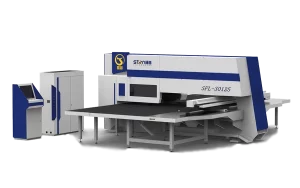
الماكينة المدمجة للتثقيب المؤازر بالليزر المؤازر SFL سلسلة SFL CNC
At STON, we pay close attention to the full machine system. A punch is only one part of the story. The frame, servo drive, control system, worktable, tooling, and after-sales training all affect real production.
The disadvantages of sheet metWhat Are the Disadvantages of Sheet Metal Punching?al punching should be understood before buying equipment. Punching requires tools. If a factory needs many special shapes, it may need extra punch tools. Tooling cost and tool storage should be planned. Also, punching may create burrs if the punch and die are worn or poorly matched.
Punching can also deform thin or delicate material if the sheet is not supported well. Very complex outer contours may be better suited for laser cutting. And if the order changes every day with unique shapes, a factory should compare punching vs laser cutting carefully before choosing one process.
Still, these disadvantages do not make punching weak. They simply show that process selection matters. For repeated holes, louvers, dense patterns, cabinet panels, and metal parts with standard features, punching offers strong efficiency and reliable cost control.
Common concerns and solutions:
| Concern | Practical Solution |
|---|---|
| Tooling cost | Use standard tooling where possible |
| Burr formation | Maintain punch and die set regularly |
| Sheet deformation | Use proper support, clamps, and sequence |
| Special shapes | Combine punching with laser cutting when needed |
| Operator errors | Use CNC programs and clear training |
For many factories, the best choice is not one machine forever. It is a smart process layout: cutting, punching, bending, and automation working together.
STON is a sheet-metal automation and CNC fabrication equipment manufacturer. We provide OEM/ODM and factory-direct support for global manufacturers. Our customers include sheet-metal job shops, electrical cabinet plants, HVAC ducting producers, door and frame factories, appliance manufacturers, telecom enclosure makers, metal furniture producers, distributors, system integrators, and industrial automation partners.
When we help a buyer choose a sheet metal punching machine, we do not start with a model number. We start with the product. What material do you process? What is the metal sheet size? How many holes are on each part? Do you need forming, embossing, or louvers? What is your daily output target? What local voltage, climate, and safety rules should the machine meet?
This approach helps the buyer avoid the wrong investment. A small shop may need a flexible CNC turret punching machine. A large enclosure factory may need automatic sheet metal punching with loading and unloading. A distributor may need a reliable turret punch press line that is easy to install, train, and service in the local market.
STON can support buyers with:
We build machines for long-term production, not just showroom photos. A little less glamour. A lot more uptime.
STON’s All Servo Turret Punching Machine, also known as a servo drive CNC turret punch press, is designed for precise and efficient sheet metal punching. It uses servo drive technology, a multi-station turret, CNC sheet movement, and a strong frame structure to help factories produce consistent punched parts.
The machine can complete punching, forming, embossing, perforation, and marking in one programmed workflow. It is suitable for electrical cabinets, door panels, dense screens, HVAC panels, telecom enclosures, EV charging cabinets, appliance panels, and metal furniture components. This makes it a practical choice for manufacturers that need both flexibility and speed.
For buyers who care about high precision, repeatability, energy efficiency, uptime, and low total cost of ownership, the all servo turret punch press offers a strong upgrade path. It can reduce manual work, improve punching results, and support repeatable sheet metal fabrication at scale.
| STON Advantage | Buyer Benefit |
|---|---|
| Servo drive system | Better control and lower energy use |
| Multi-station turret | Faster tool switching and flexible processing |
| CNC control | More repeatable hole patterns |
| Strong machine structure | Stable long-term production |
| OEM/ODM customization | Better fit for local factories |
| After-sales support | Less downtime and easier maintenance |
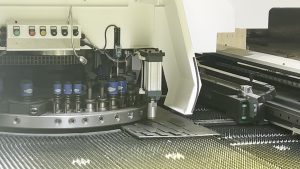
CNC punching is a smart choice when your factory needs fast, repeatable, and accurate features in sheet metal. It is especially useful for cabinets, enclosures, doors, dense screens, HVAC panels, metal furniture, and industrial metal components. If your team punches the same patterns again and again, automation can save serious time.
The key is choosing the right machine and the right manufacturer. Sheet metal punching results depend on machine structure, tooling, CNC control, training, and service. A low-cost machine may look tempting, but poor uptime can eat the savings quickly.
STON helps global buyers plan practical sheet metal fabrication solutions, from punch press selection to tooling, automation, training, spare parts, and after-sales service. If you are comparing a sheet metal punch, CNC punching machine, turret punch press, or complete sheet metal automation line, STON can help you match the equipment to your real production needs.
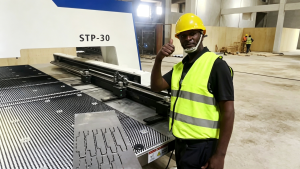
Contact STON to discuss your sheet metal punching project and get a factory-direct CNC punching solution for your products, materials, and production goals.
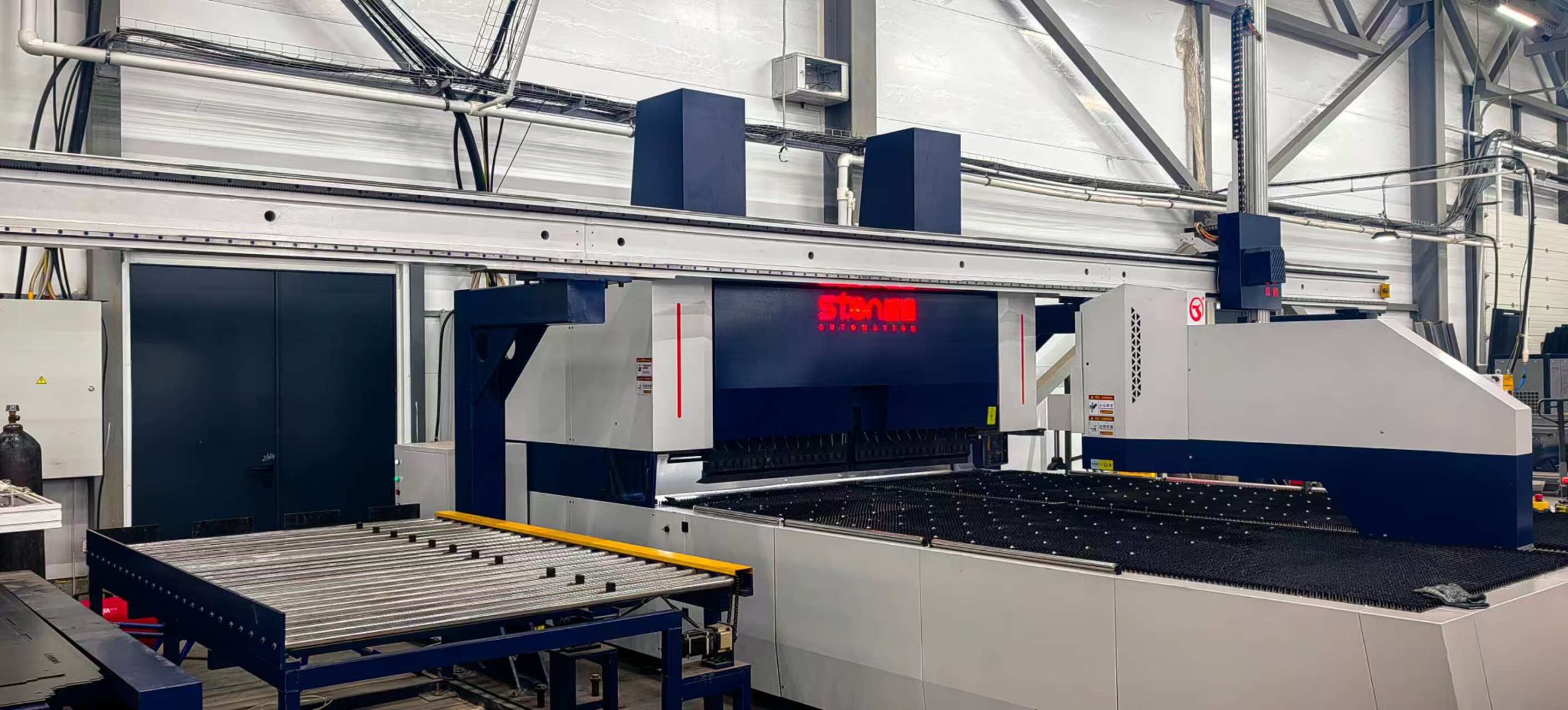
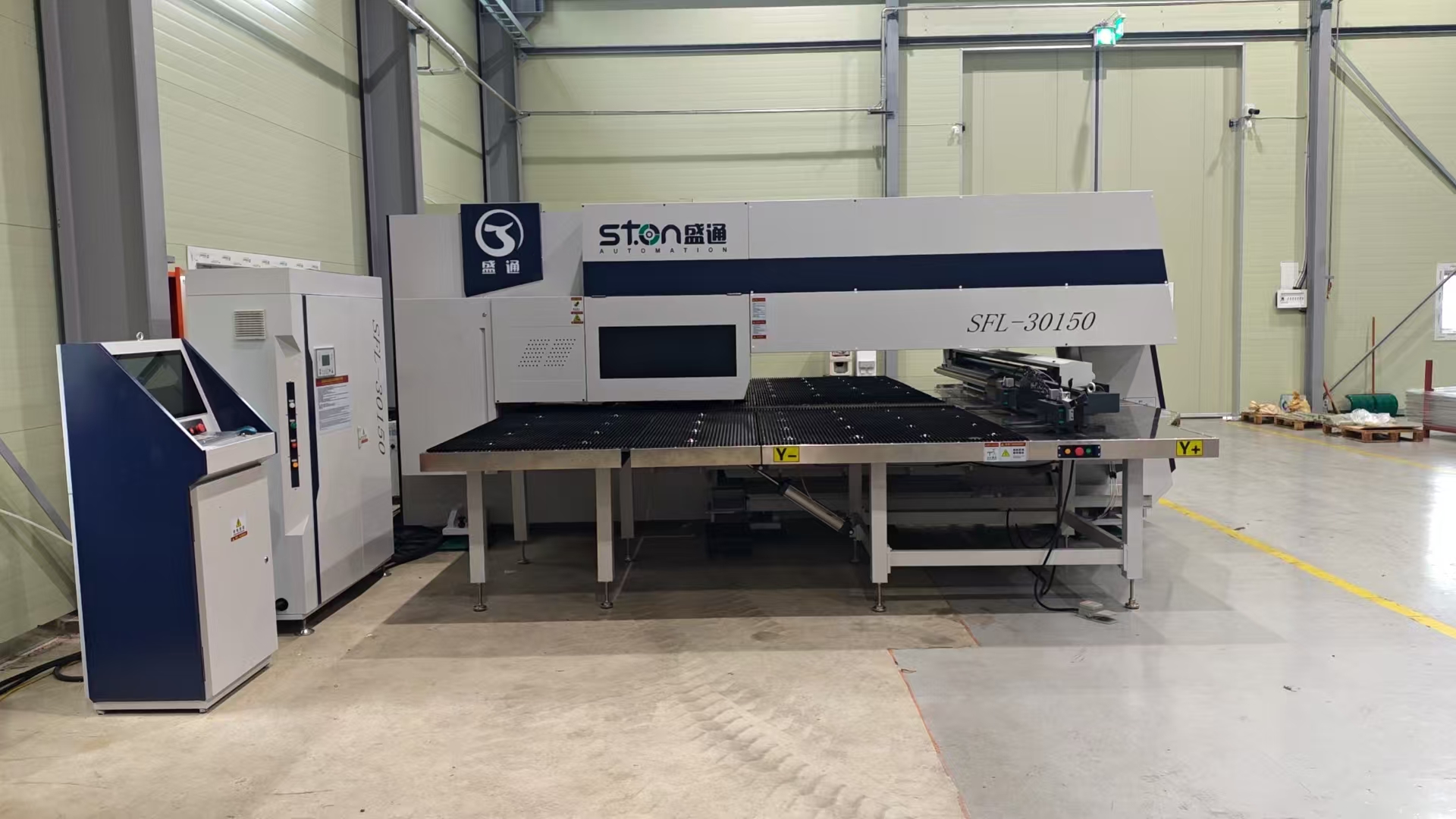

سواء أكنت تقوم بترقية خط إنتاج قائم أو تبدأ مشروعًا جديدًا، فإن STON ستخصص حلاً بنظام التحكم الرقمي للإنتاج الخاص بك.


